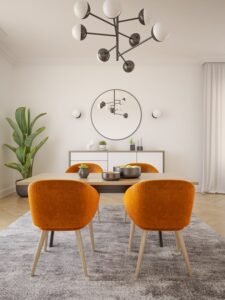
Good modern home decor ideas rarely come from a single showstopping purchase.
They come from small deliberate choices:
- The wood tone you repeat across two rooms
- The lamp you swap for one with warmer light
- The wall you finally hang something on
This list moves room by room, covering the living room, bedroom, kitchen, dining area, and entryway.
Along with small-space fixes and budget-friendly swaps.
Some ideas focus on furniture and layout; others on texture, color, or light.
None of them require a full renovation, and most can be done over a weekend or two.
Key Takeaways:
- Use a cohesive color palette for a polished, modern look.
- Layer lighting and textures to add warmth and comfort.
- Mix natural materials like wood, linen, and plants for a cozy feel.
- Keep decor simple and intentional to avoid a cluttered space.
- Balance style and functionality for a beautiful, practical home.
1. Let One Wood Tone Anchor the Living Room
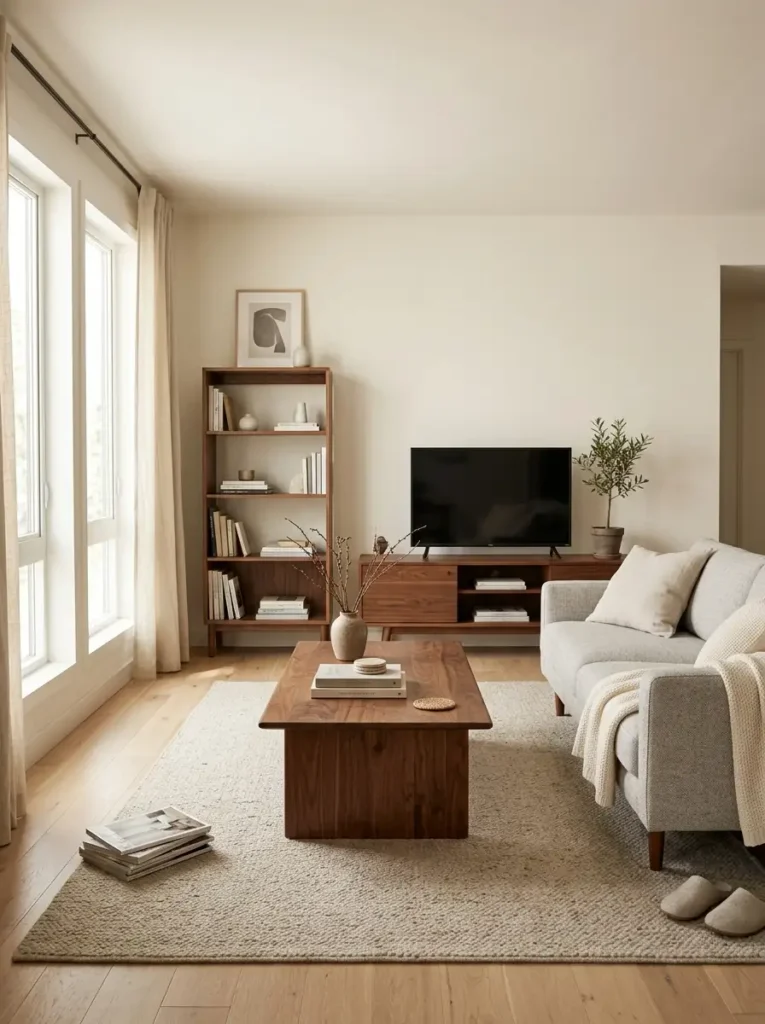
Walk into most cluttered-feeling living rooms, and you’ll usually find three or four different wood tones competing.
Pick one — oak, walnut, or a mid-tone maple — and use it for your largest pieces:
the coffee table, a media console, maybe a bookshelf.
Smaller accents can vary.
But that consistency in the big furniture is what makes a room read as put-together instead of assembled piece by piece over the years.
2. Build Your Palette Around Two Neutrals and One Accent
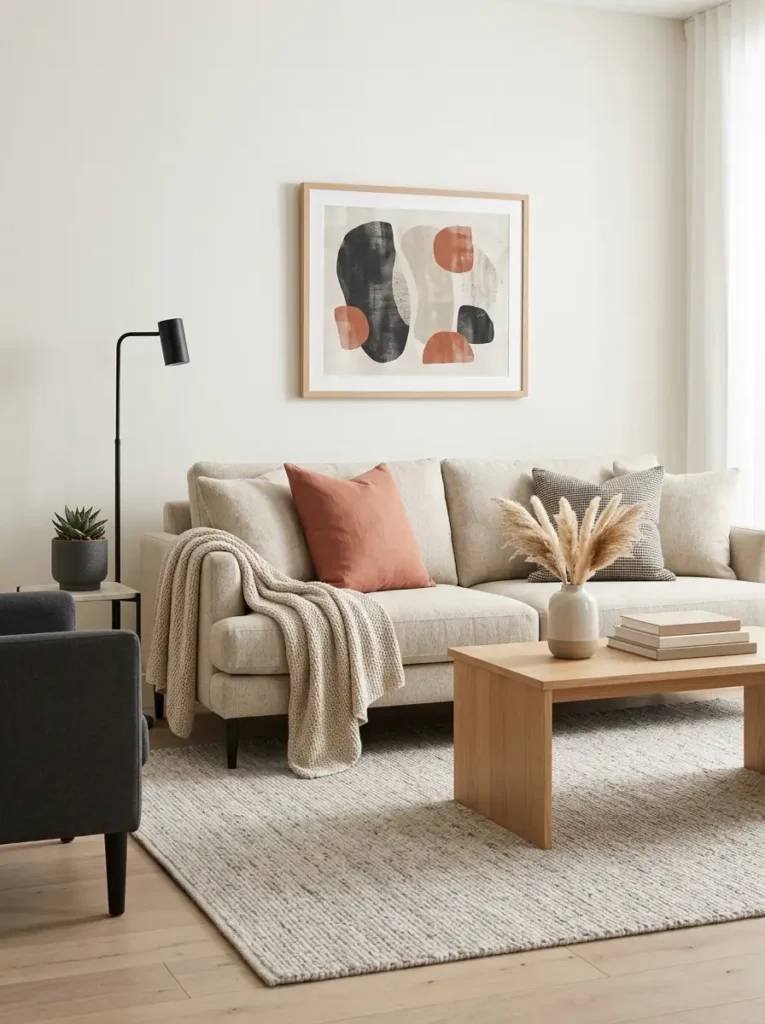
A cohesive color palette doesn’t mean everything matches — it means everything relates.
Choose a light neutral (warm white or oatmeal), a deeper neutral (charcoal or espresso), and one accent color you actually like.
Whether that’s a muted terracotta or a deep forest green.
Repeat that accent in at least two places, like a throw pillow and a piece of art.
So it reads as intentional rather than a one-off splash of color.
3. Mix Stone and Wood for Grounded Contrast
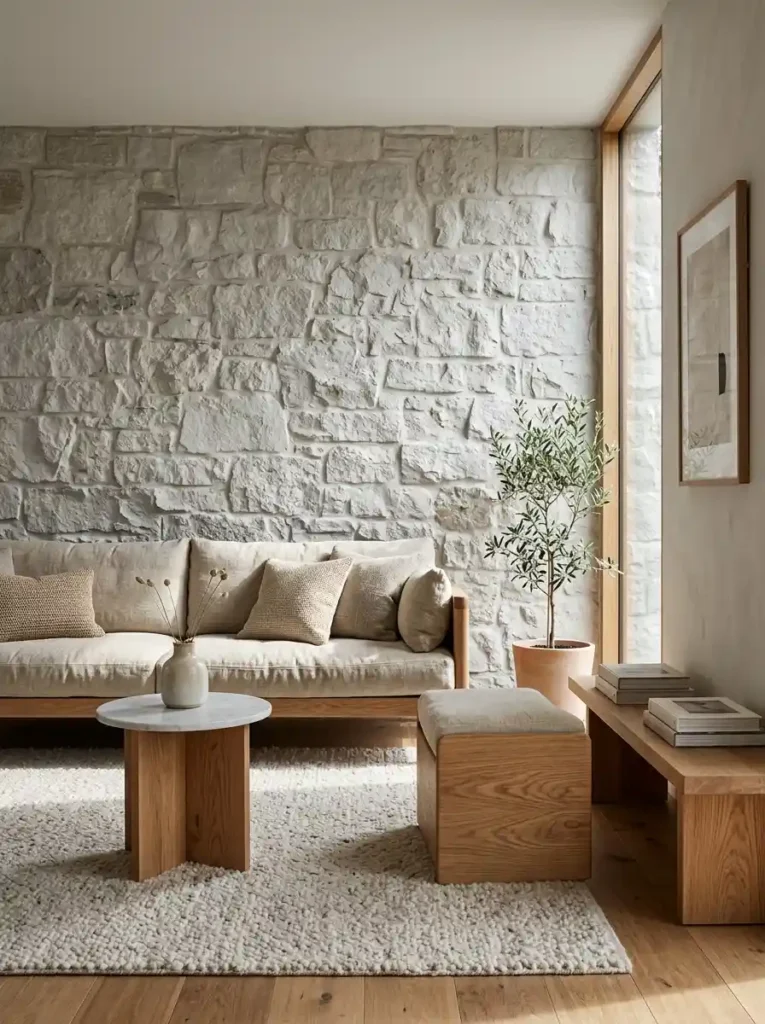
A stone or marble side table next to a wood-framed sofa gives a room the kind of contrast that photographs well and feels good in person, too.
Cool and hard against warm and soft.
You don’t need an expensive slab; a small marble accent table or a set of stone coasters does the job.
This pairing shows up constantly in contemporary design because it works without needing a lot of extra styling around it.
4. A Low-Profile Bed Frame Can Instantly Refresh a Bedroom
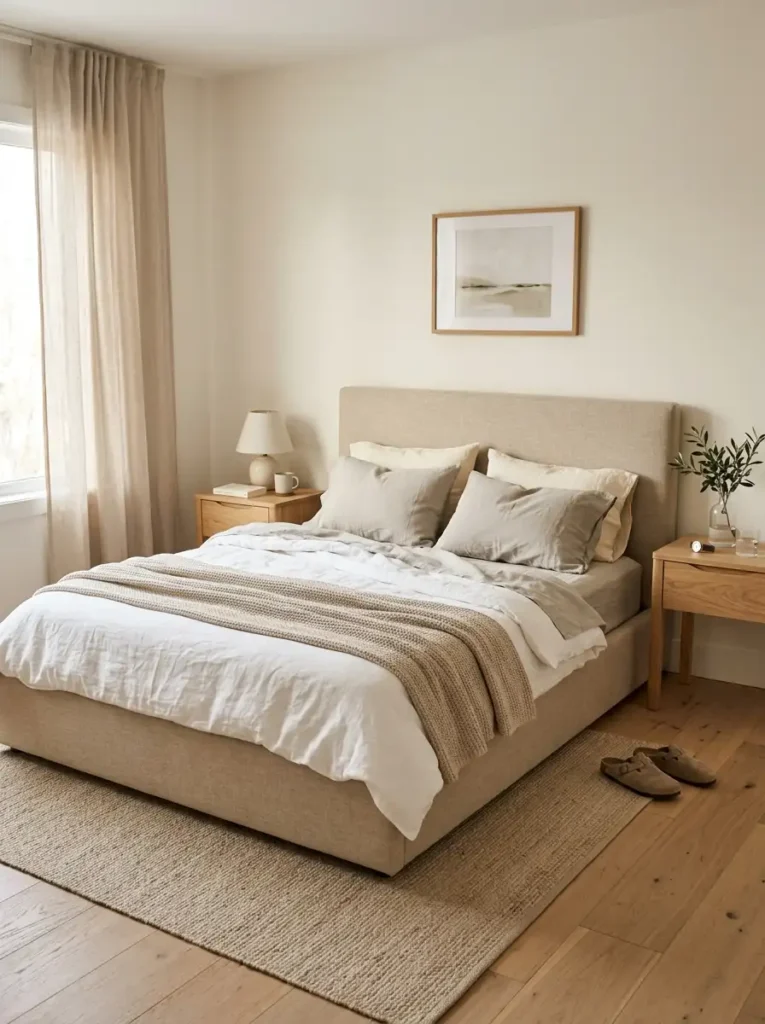
A tall, heavily upholstered bed frame can sometimes make a bedroom feel more traditional or visually heavy.
Swapping to a low-profile frame in linen or a simple wood slat design shifts the whole room’s proportions.
The ceiling suddenly feels higher, and the space around the bed feels more open.
Pair it with matching nightstands at roughly the same height as the mattress for a calmer, more restful modern bedroom decor look.
- Frame: a low profile in linen or a simple wood slat design.
- Nightstands: matching, at roughly the same height as the mattress.
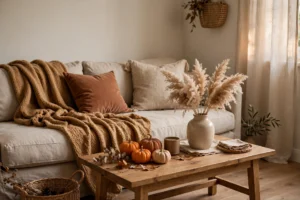
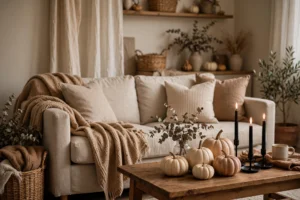
5. Layer Three Textures Into One Seating Area
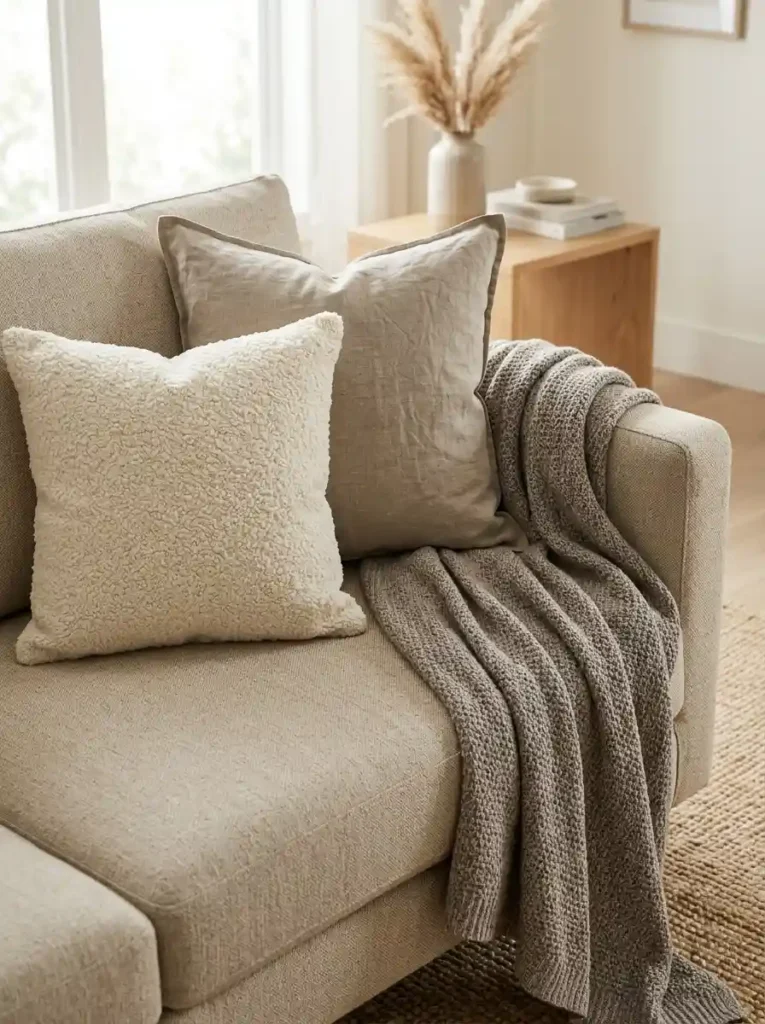
Take your sofa, add a bouclé throw pillow, a linen pillow beside it.
And a cotton or wool throw blanket draped over the arm.
That’s three distinct textures within arm’s reach of each other.
And it’s usually enough to keep a neutral room from feeling flat or sterile.
Layered, natural textures do more for a room’s warmth than color ever will.
They’re what make a space feel touchable instead of just looked at.
6. Clear Your Kitchen Counters Down to Three Objects
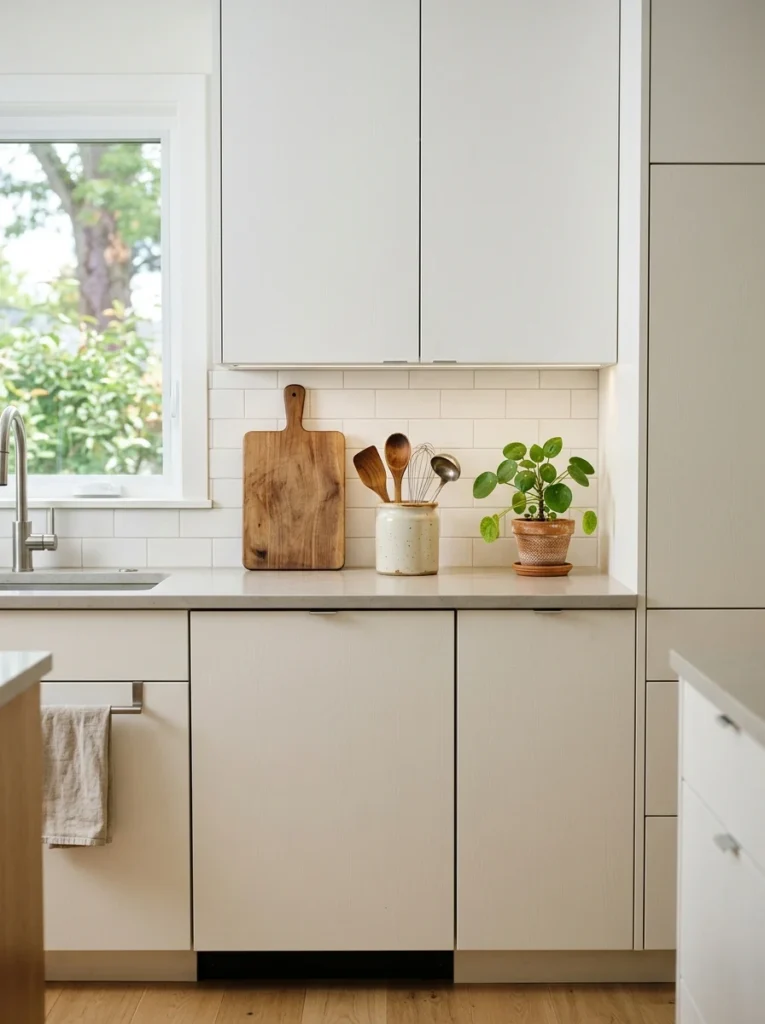
Modern kitchen decor leans on restraint more than any other room.
Pick three functional objects worth keeping out — a wood cutting board, a ceramic utensil crock, maybe a single plant.
And put everything else away.
Flat-panel cabinetry and hidden hardware already do a lot of the visual simplifying; cluttered counters undo that instantly.
The goal isn’t an empty kitchen, just an edited one.
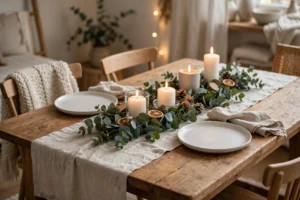
7. Mix Dining Chairs Instead of Buying a Matched Set
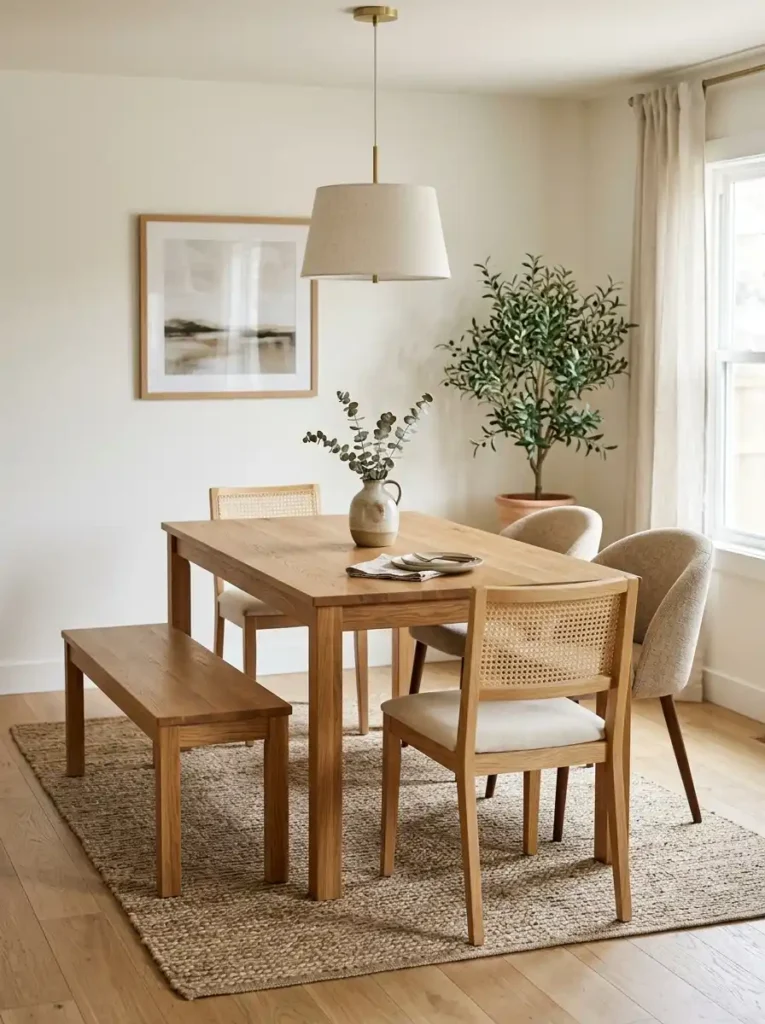
A wood dining table with a bench on one side and two or three different chair styles on the other looks more collected than a boxed six-piece set.
And it’s often cheaper to assemble over time.
The trick is keeping the seat heights consistent and sticking to one or two wood tones across the mismatched pieces, so the variety reads as a choice rather than a mismatch.
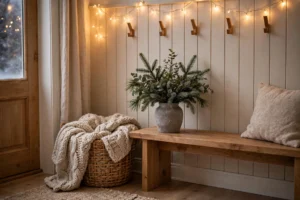
8. Use Your Entryway Mirror to Solve Two Problems at Once
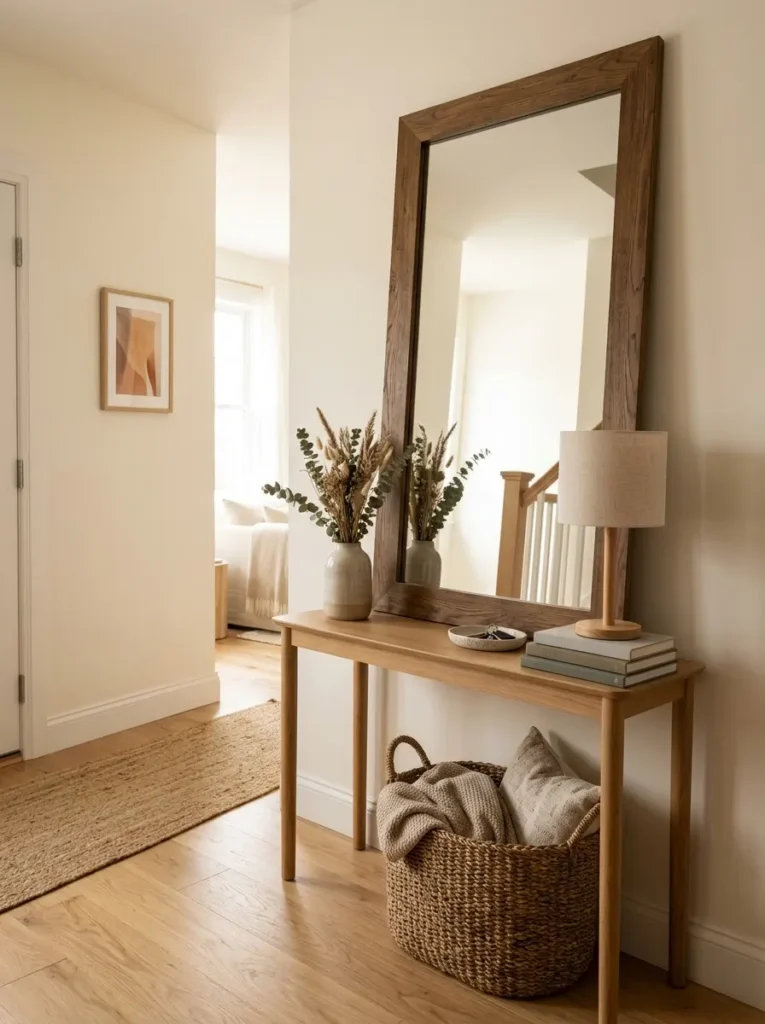
A large mirror near the front door does double duty: it gives you a last-glance check before you leave, and it bounces natural light deeper into a space that often has none of its own.
Lean it against the wall above a slim console table rather than hanging it, which makes future rearranging easier and adds a slightly more relaxed, less formal feel to modern entryway ideas.
9. Choose Furniture That Does Two Jobs in a Small Apartment
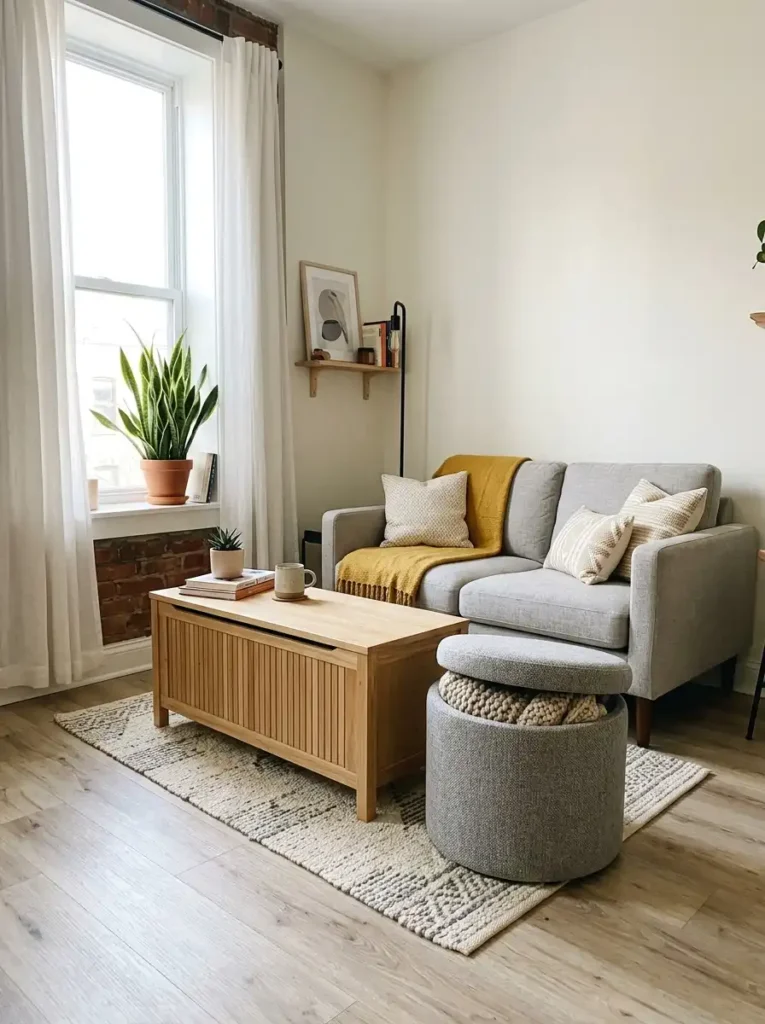
In modern small space decor, every piece earns its keep twice.
A storage bench works as a coffee table and extra seating when guests come over.
An ottoman with a hinged top hides blankets and doubles as a footrest.
This isn’t about buying “space-saving” furniture as a category — it’s about asking, before any purchase, what else this piece could reasonably do.
- Storage bench: works as a coffee table and extra seating when guests come over.
- Hinged-top ottoman: hides blankets and doubles as a footrest.
10. Commit to One Accent Wall, Not Several
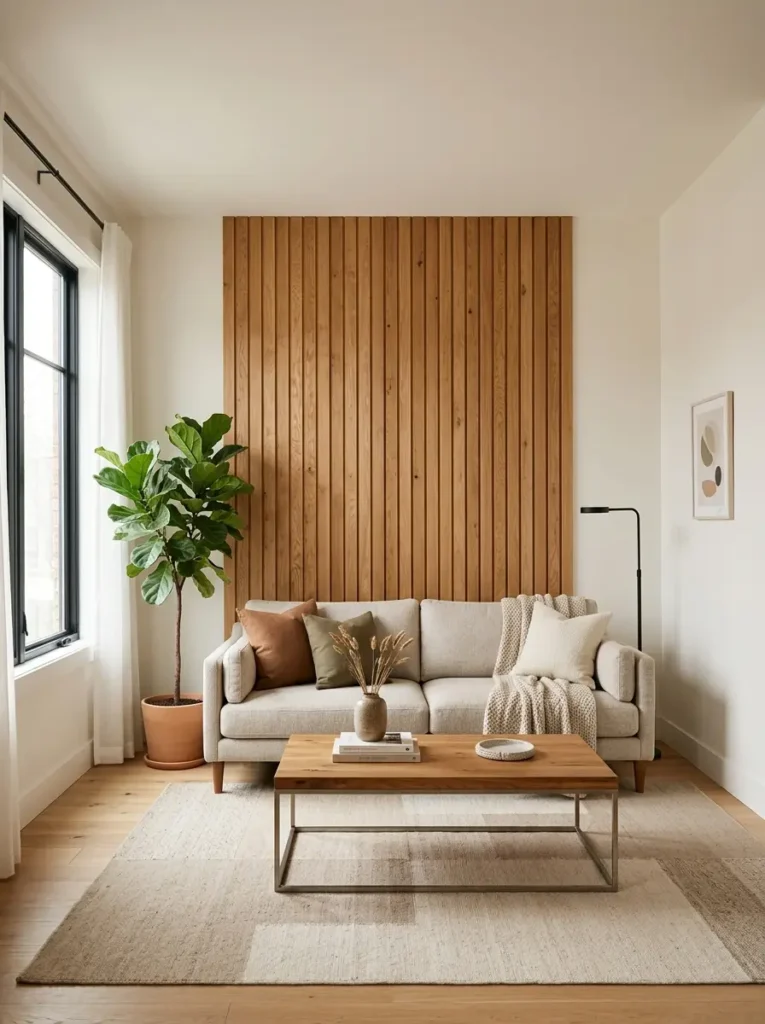
An accent wall works because it’s a single, clear decision — one wall, painted, paneled, or plastered, while the rest of the room stays quiet.
Trying to add visual interest to two or three walls at once usually competes with itself and cancels out the effect.
Behind the sofa or the headboard are the two spots that tend to work best, since they naturally become the room’s focal point.
- Behind the sofa: anchors the whole seating area.
- Behind the headboard: makes the bed the focal point of the bedroom.
11. Replace One Overhead Light With Three Smaller Ones
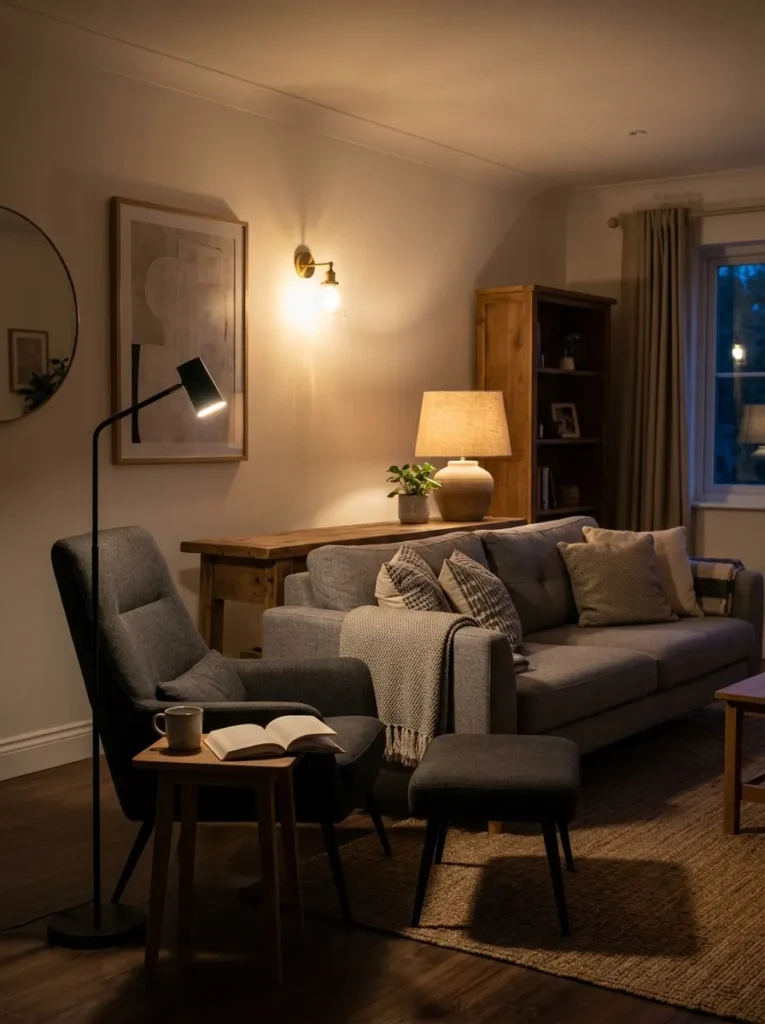
Swap out reliance on a single ceiling fixture and add a floor lamp near a chair, a table lamp on a console, and a wall sconce or two flanking a mirror.
Layered lighting like this lets you dim or brighten specific corners of a room depending on the time of day, instead of flooding the whole space with the same flat light regardless of what you’re doing in it.
12. Use a Tall Plant to Break Up a Flat Wall
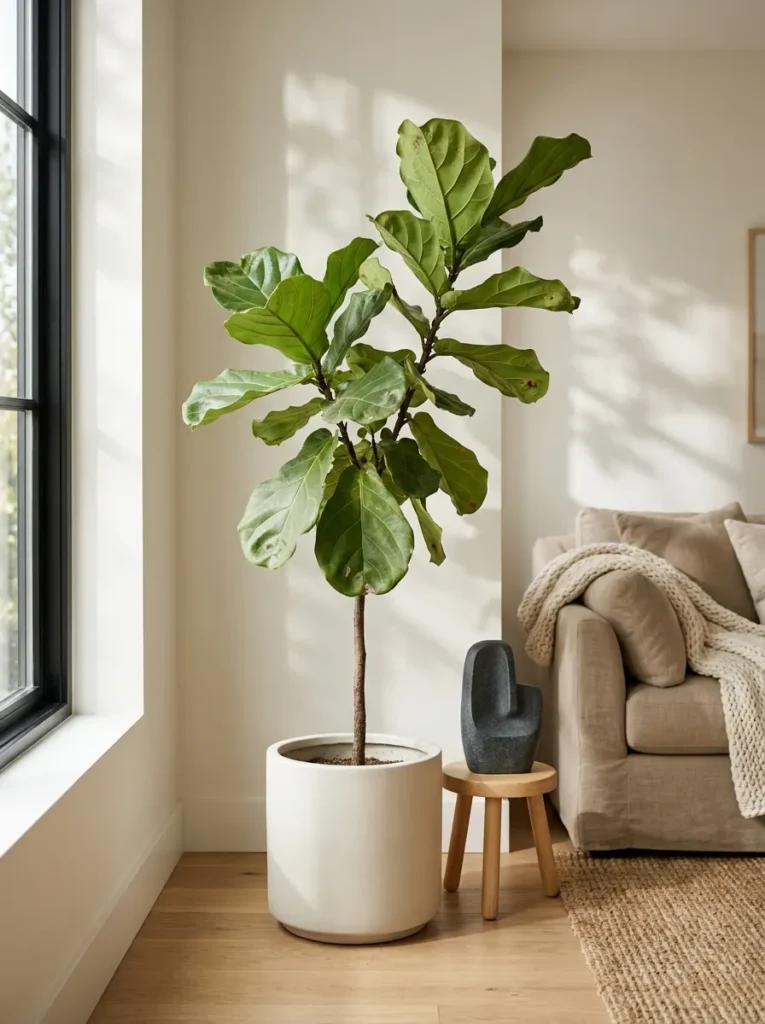
A fiddle leaf fig or a bird of paradise in a simple ceramic planter fills vertical space that furniture alone can’t reach, and it softens the hard edges of glass, metal, or stone finishes nearby.
Put it in a corner that would otherwise sit empty, rather than centering it, so it reads as a natural addition to the room instead of a staged prop.
13. Angle Your Sectional to Face a Real Focal Point
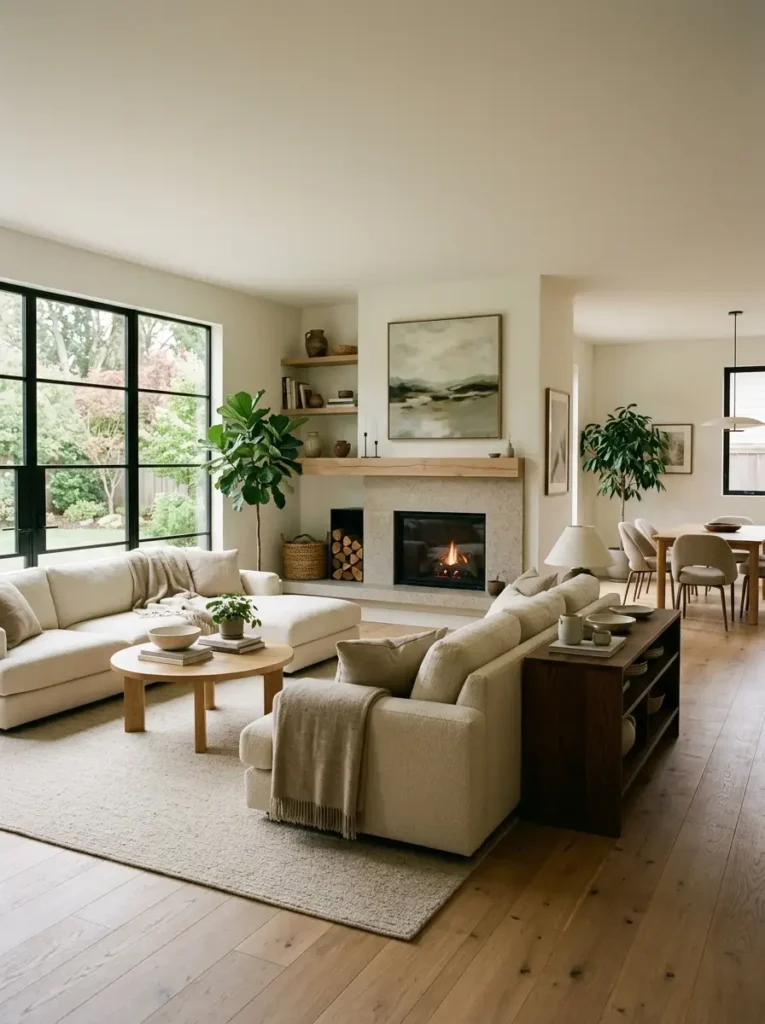
In an open floor plan, a sectional sofa can end up floating with no clear direction.
Pick an actual focal point — a fireplace, a media wall, even a large window — and angle the sectional to face it directly.
This simple adjustment can make an open-plan living area feel more organized without adding extra furniture.
14. Pick a Coffee Table With an Actual Shape
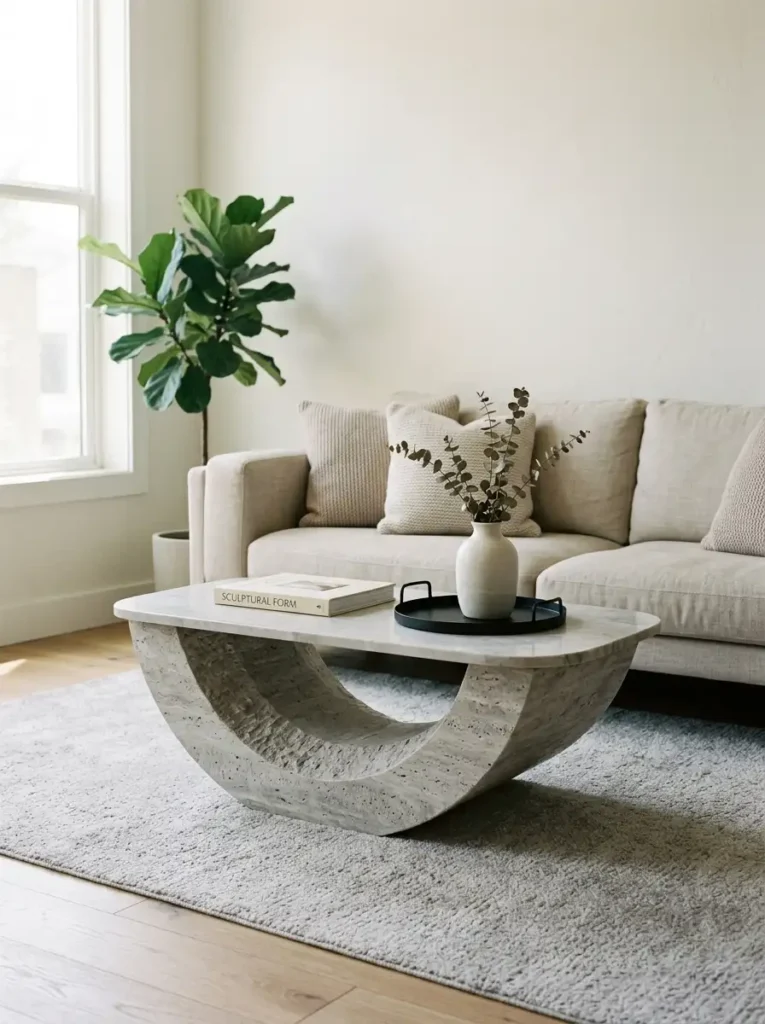
A coffee table with a curved edge, an asymmetrical stone base, or an interesting mixed-material design can act as a quiet focal point without adding a single extra accessory.
Keep the styling on top minimal — a tray, one book, maybe a small vase — so the shape of the table itself stays visible instead of getting buried under decor.
- Look for: a curved edge, an asymmetrical stone base, or a mixed-material design.
- Style with: a tray, one book, and maybe a small vase.
15. Add One Mid-Century Piece to a Contemporary Room
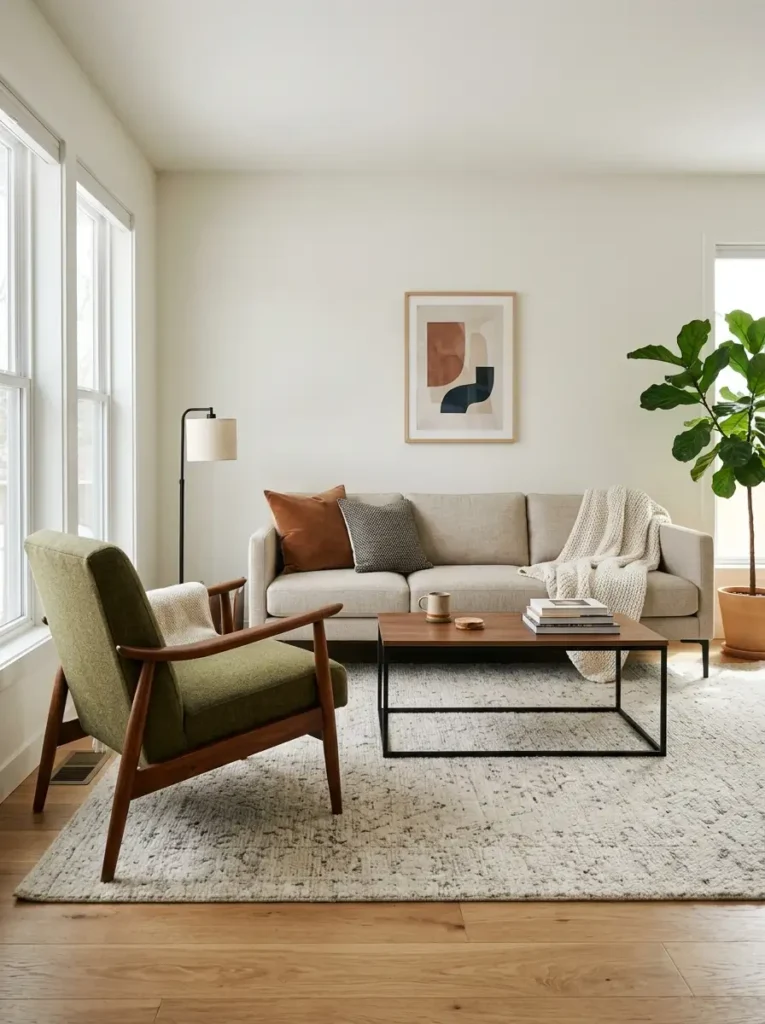
A single mid-century modern accent chair or credenza, with its tapered legs and warm wood tones, adds a sense of history to an otherwise all-new room.
It works because the contrast is subtle rather than jarring — both styles share the same appreciation for simple shapes, so the older piece feels like a natural part of the mix instead of an outlier.
16. Group Ceramic and Glass at Different Heights
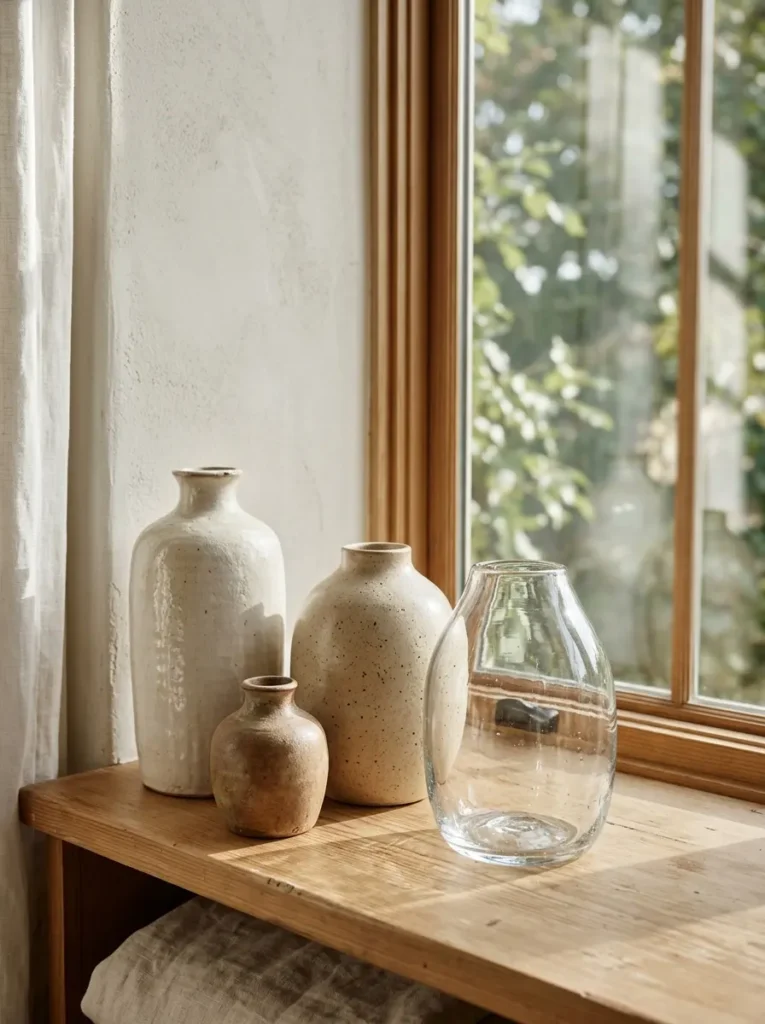
Three ceramic vases at different heights, with a single glass piece mixed in near a window where it can catch the light, create more visual interest than one large object alone.
The key is varying the heights and keeping the color palette tight — two or three tones at most — so the grouping reads as curated rather than cluttered.
17. Style a Console Table With the Rule of Three
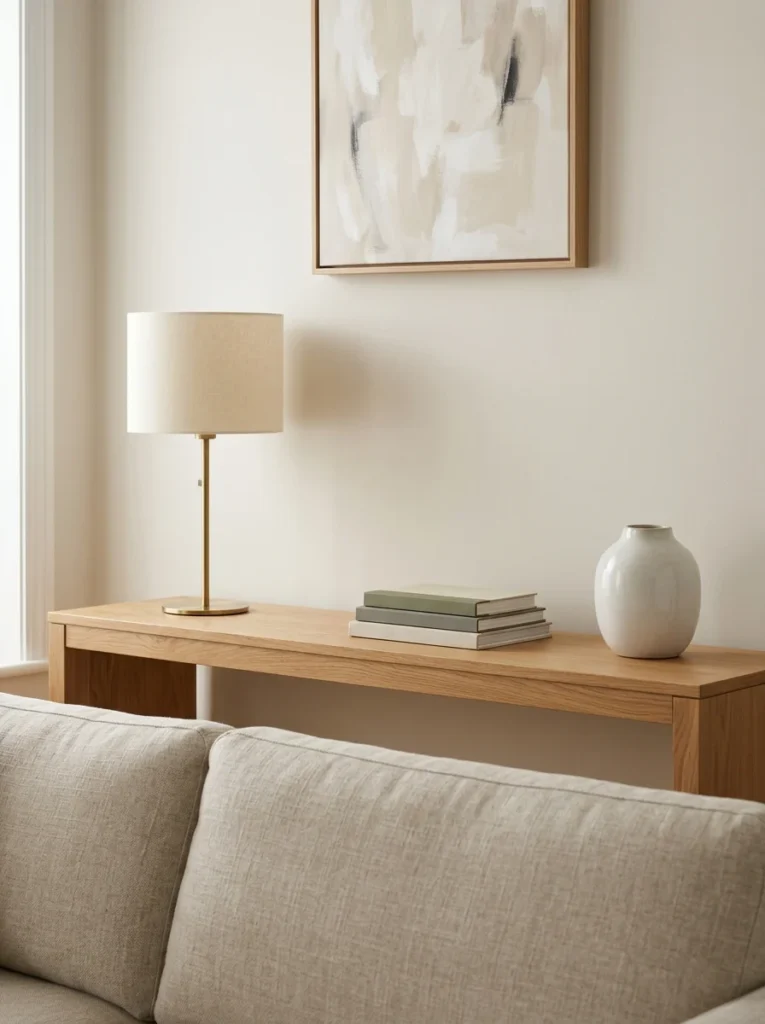
A console table behind a sofa or in a hallway benefits from the same restraint as a coffee table: one lamp, one stack of two or three books, and one decorative object.
Anything more starts to look like a catch-all surface.
This small habit of editing down to three items is one of the simplest modern home styling ideas to apply anywhere in the house.
18. Borrow Scandinavian Design’s Approach to Light Wood
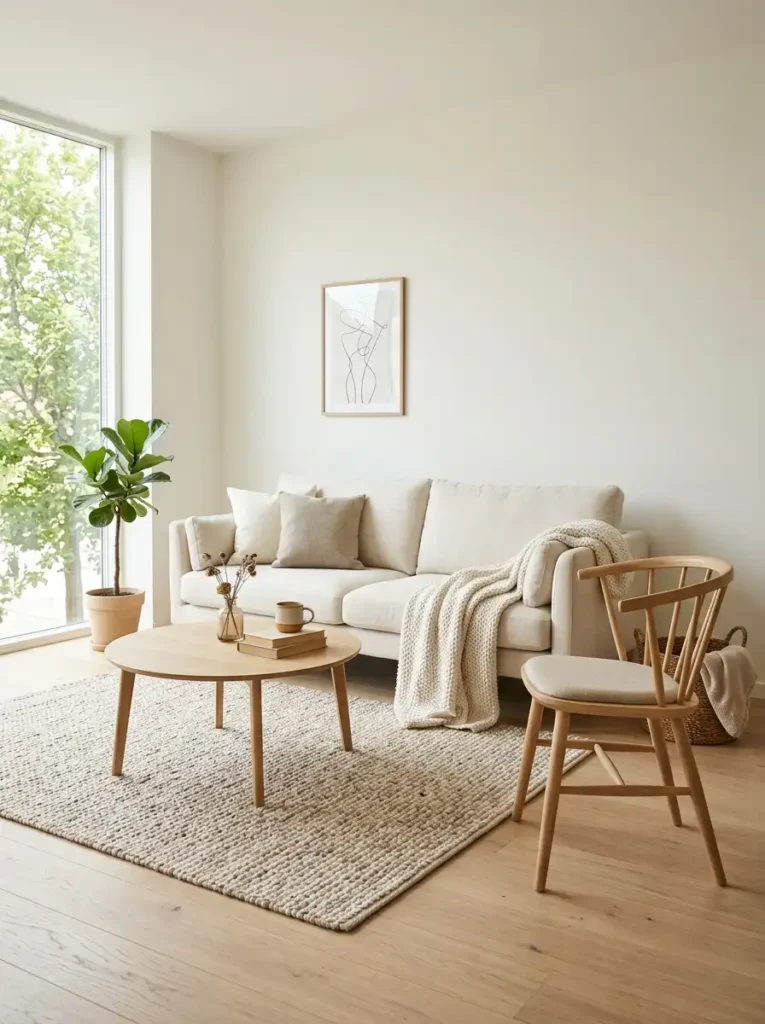
Where modern decor can sometimes lean cool or stark, Scandinavian design brings in light oak or birch furniture and soft neutral textiles that keep a room feeling bright and lived-in.
Pull one or two pieces from this style — a light wood dining chair, a woven wool rug — into an otherwise modern room for a warmer, cozier modern home decor look.
19. Update Hardware Before You Buy New Furniture
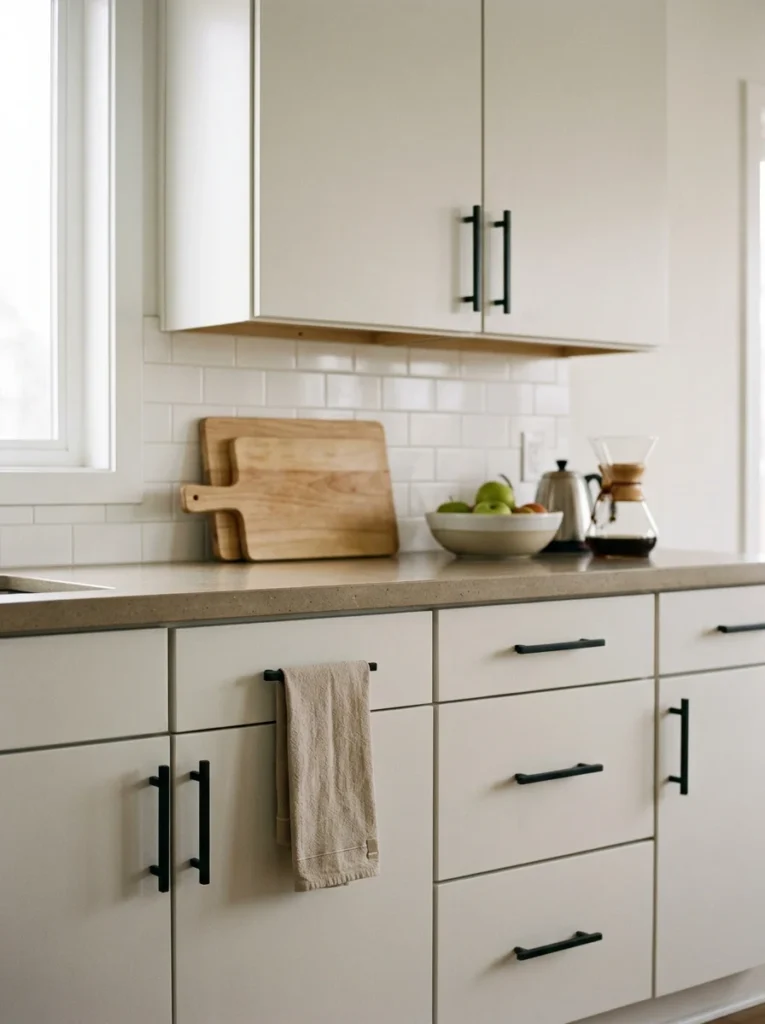
Swapping cabinet pulls, doorknobs, or curtain rods for simple matte black or brushed metal versions changes a room’s feel for the cost of a few small parts.
It’s one of the most effective modern home decor on a budget precisely because it touches something you look at daily without requiring you to replace anything structural.
20. Build a Reading Corner Around One Good Chair
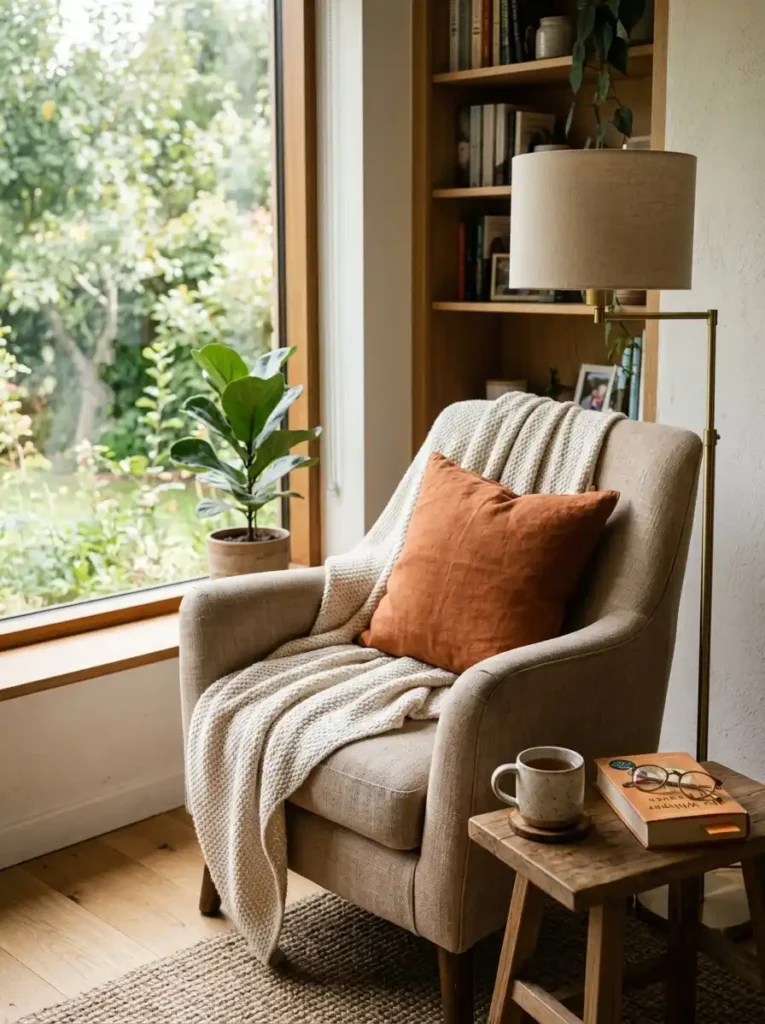
A reading nook doesn’t need a dedicated room — just:
- An accent chair near a window
- A floor lamp positioned for actual reading light rather than ambiance
- A small side table for a mug
- A throw blanket within reach
This kind of small, personal corner is often what makes a modern home feel lived-in rather than staged for a photograph.
21. Treat Negative Space as a Design Choice, Not a Gap
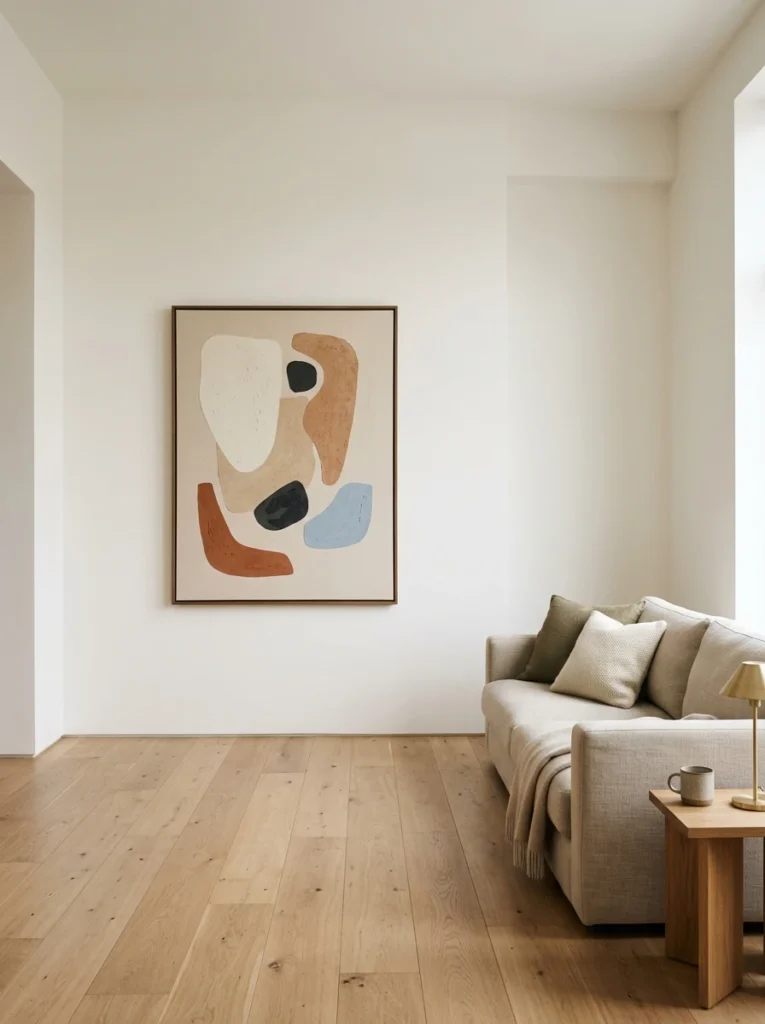
An empty stretch of wall or an uncluttered corner isn’t unfinished — it’s what gives your statement pieces room to stand out.
Before adding another shelf or another piece of art, ask whether the space actually needs it.
Some of the best modern home design ideas come down to restraint: knowing when a room has enough and resisting the urge to fill what’s left.
Mistakes to avoid
- Mixing three or four wood tones. Pick one main tone and let small accents vary.
- Relying on one ceiling light. Add at least two lamps at different heights.
- Choosing a rug that’s too small. The front legs of your sofa should sit on it.
- Hanging art too high. The center should sit near eye level.
- Adding accent walls everywhere. One clear focal wall is stronger.
- Filling every empty space. Some room to breathe makes the rest look better.
Conclusion
None of these 21 modern home decor ideas require a full renovation or a matching furniture set bought all at once.
The rooms that feel the most put-together are usually the ones built gradually — one wood tone repeated here, one accent wall committed to there, lighting layered in over time.
Pick two or three ideas that address what’s actually bothering you about your space right now, whether that’s flat lighting, a cluttered console, or a bedroom that feels dated, and start there.
The rest can follow at whatever pace makes sense for you.
Frequently Asked Questions
What are the easiest modern home decor ideas to start with?
Lighting and hardware swaps tend to have the biggest visual payoff for the least effort. Adding a floor lamp or updating cabinet pulls costs little and doesn’t require rearranging furniture or repainting.
How do I keep modern decor from feeling cold?
Lean on natural textures — linen, bouclé, wool, wood — and warm lighting rather than a single bright overhead fixture. Texture and light do more to add warmth than color choices alone.
What’s the difference between modern and contemporary home decor?
Modern design refers to a specific style with roots in mid-century principles, while contemporary design shifts with whatever is current. In practice, the two overlap heavily in neutral, uncluttered rooms.
How many colors should a modern room have?
Two neutrals and one accent color is a reliable starting point. Repeating the accent in at least two spots keeps it from looking accidental.
Can small apartments use the same modern home decor ideas as larger homes?
Yes, often more effectively. Multi-functional furniture and a tight color palette matter more in a small apartment, where every piece and every wall gets noticed.
Is it expensive to update a home with modern decor?
Not necessarily. Several of the ideas here — hardware swaps, rearranging what you own, adding a plant or a mirror — cost very little and can be done in an afternoon.