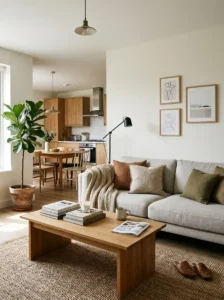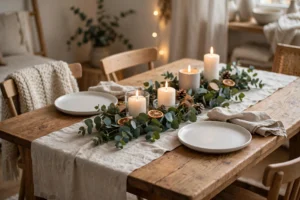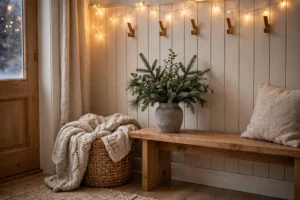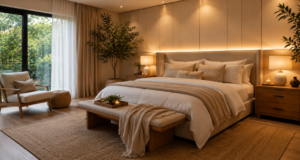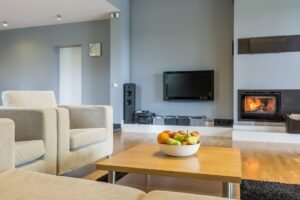
Most living rooms don’t need new furniture; they need a few deliberate choices layered in over time.
This list of 22 living room decor ideas covers texture, color, lighting, and layout, so whether you’re after simple living room decor ideas for a weekend refresh or a longer-term living room makeover idea to plan around, there’s something here worth trying.
Each idea stands on its own, so read through, pick what actually fits your space, and treat the rest as a list for later.
1. Create a Focal Point With an Accent Wall
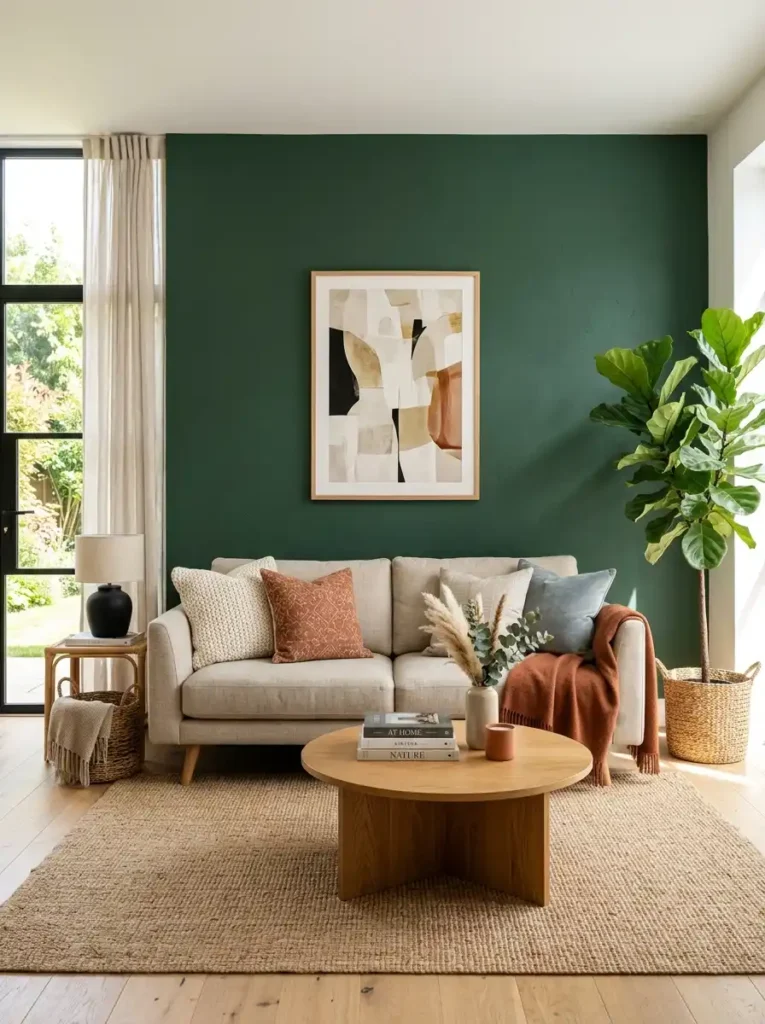
An accent wall painted, paneled, or lightly textured with plaster gives the eye somewhere to land the moment you walk in.
Choose one wall, usually behind the sofa, and keep the rest of the room quiet so it reads as a deliberate focal point rather than competing with everything else in the space.
Deep, saturated colors tend to work better for this than mid-tones, since they create more contrast against the rest of the room.
2. Build a Gallery Wall With Mixed Picture Frames
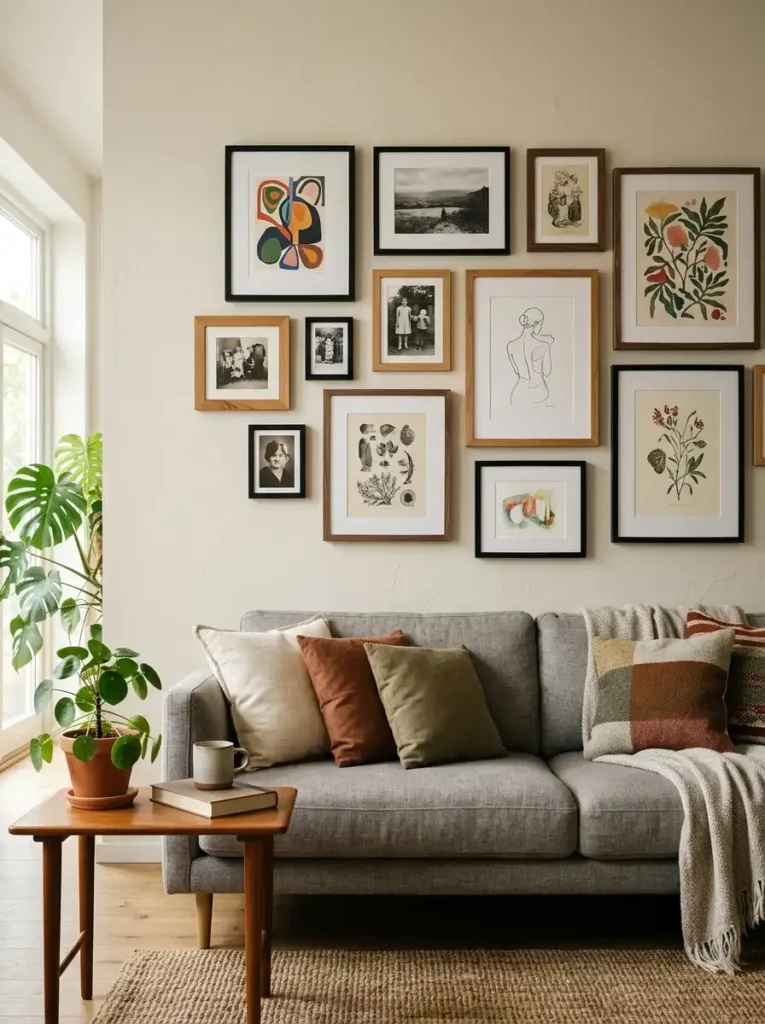
A gallery wall mixing frame sizes and finishes turns a blank stretch of wall into the room’s most personal detail.
Lay the arrangement out on the floor first using paper templates, then transfer it to the wall — this avoids extra nail holes and lets you adjust spacing before anything is permanent.
Most gallery walls work best with an odd number of pieces, since even groupings can feel a little too rigid.
Frame combinations that tend to work well together:
- Black and natural wood frames mixed
- Varying sizes with consistent spacing (2–3 inches apart)
- One larger anchor piece with smaller frames around it
3. Hang a Statement Mirror to Expand the Room
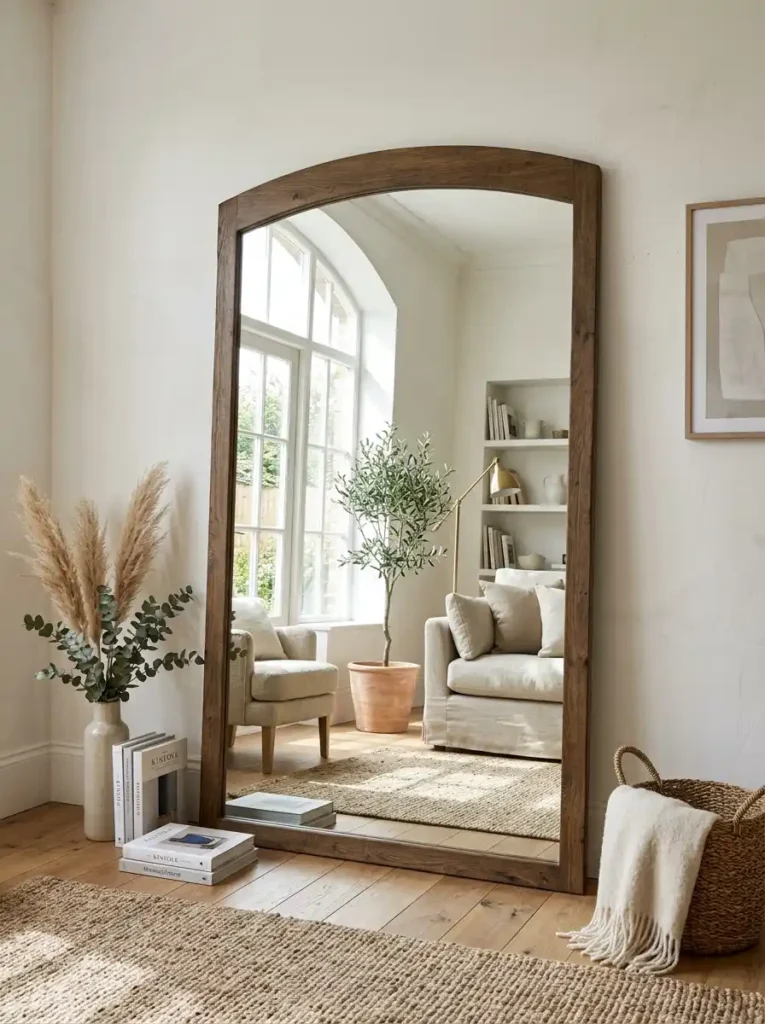
A large statement mirror reflects natural light deeper into the room and creates the illusion of more square footage, especially in a living room with limited windows.
Lean it against the wall rather than hanging it for a slightly more relaxed, collected look, or mount it directly above a console table for a more formal finish.
An oversized round or arched mirror tends to soften a room full of straight-edged furniture.
4. Add Architectural Interest With Decorative Wall Molding
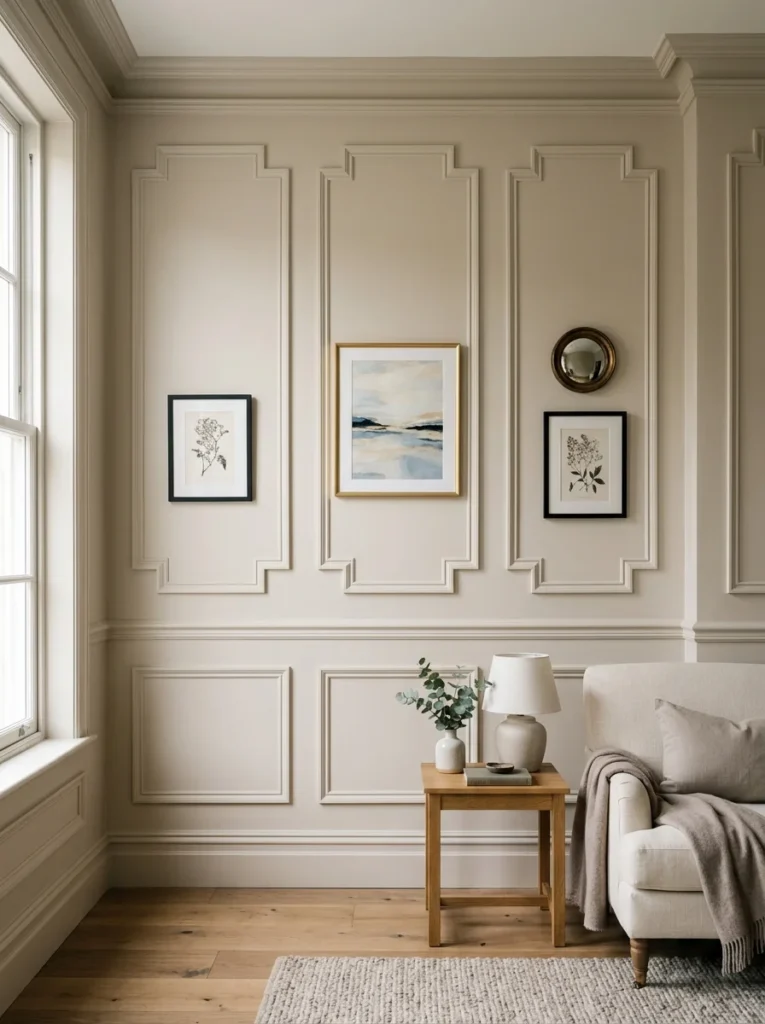
Decorative wall molding — picture-frame panel molding, wainscoting, or simple trim — adds texture and depth to a flat wall without needing any additional decor once it’s installed.
It works especially well behind a sofa or in a dining-adjacent living space where you want a more finished, architectural feel.
Painting the molding the same color as the wall keeps the look subtle; a contrasting color makes it more of a statement.
5. Layer Textured Throw Pillows for Instant Warmth
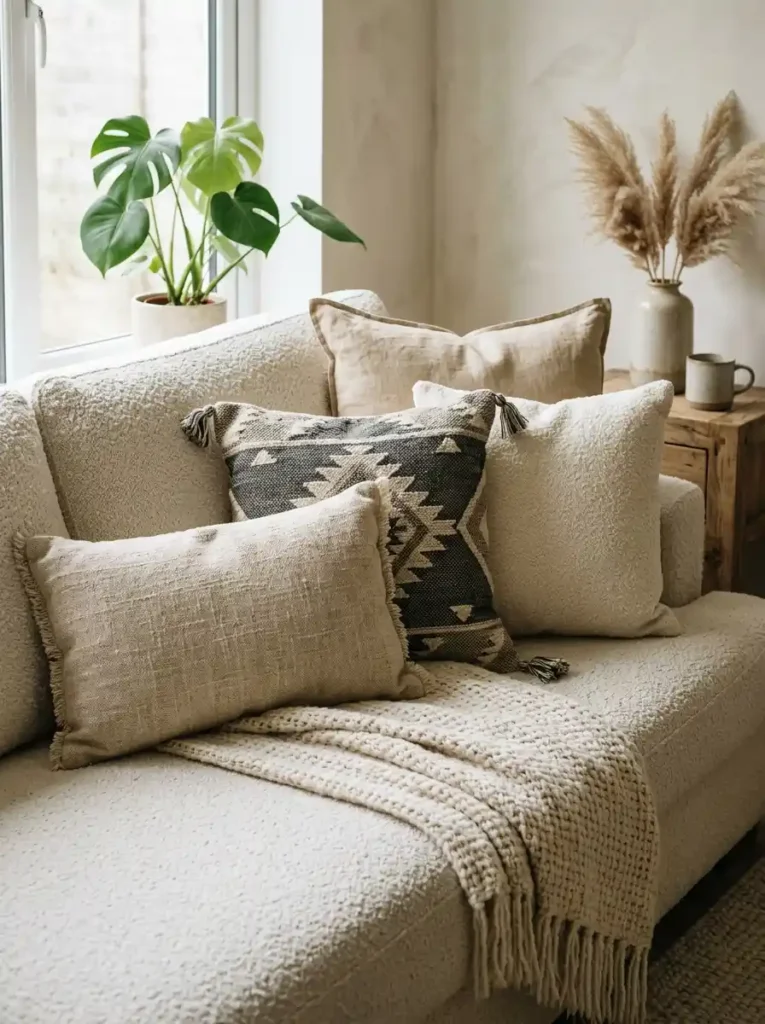
A bouclé pillow next to a linen one, with a woven or patterned pillow mixed in, does more to warm up a neutral sofa than almost any other single change.
Stick to an odd number of pillows per seat, and vary the textures rather than the colors if you want the look to feel calm instead of busy.
This is also one of the cheapest ways to test a new color before committing to it elsewhere in the room.
6. Drape a Knitted Throw Blanket Over the Sofa
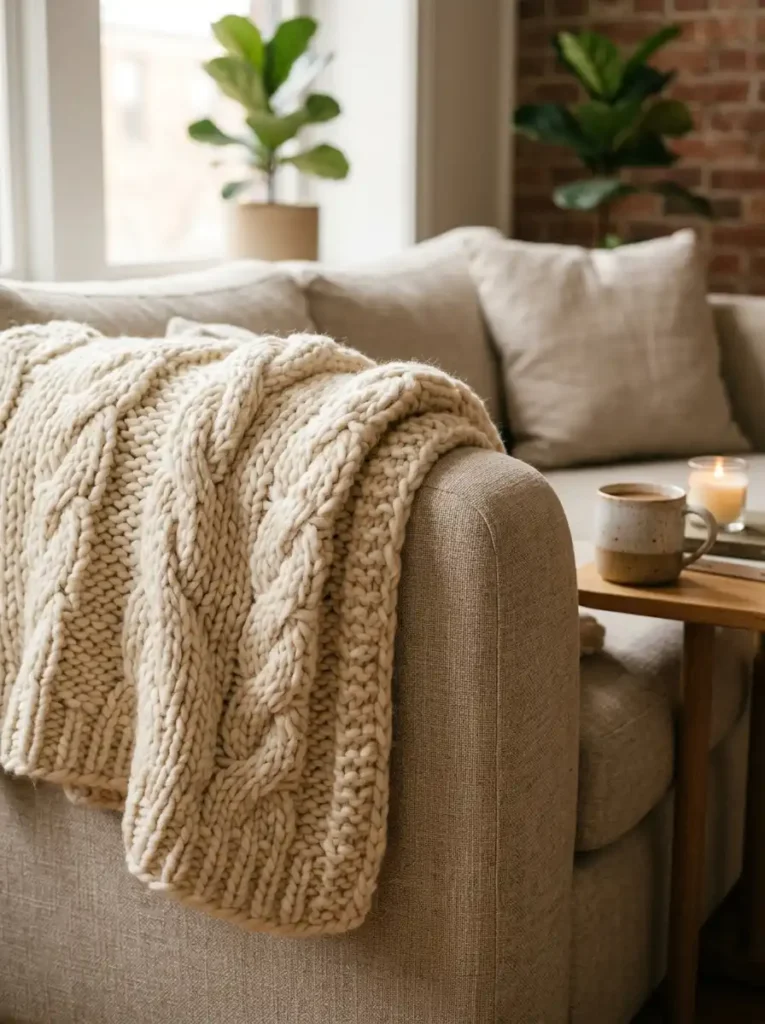
A chunky knitted throw blanket draped loosely over the arm of the sofa, or folded at the foot of an accent chair, adds warmth and a lived-in quality that’s hard to fake with anything else.
Drape it casually rather than folding it into a tight square — a slightly rumpled fold reads as used, not staged.
Keep a second, more practical throw nearby for actual use, so the styled one stays looking fresh.
7. Choose Linen or Sheer Curtains for Softness
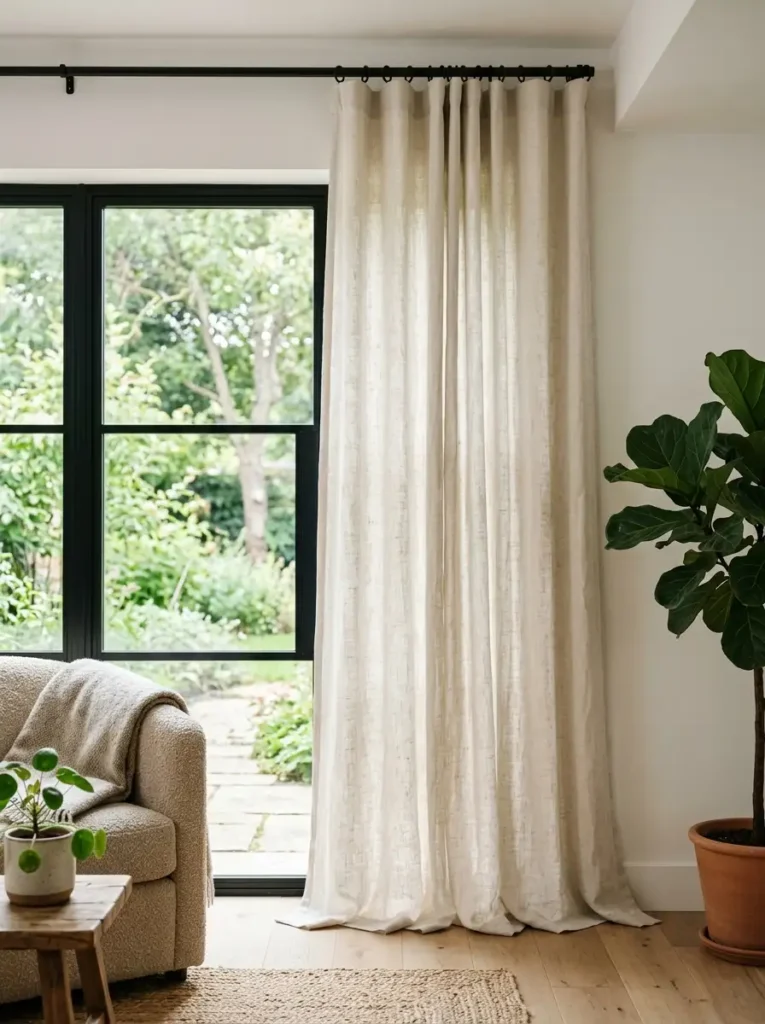
Linen curtains add texture and a slightly relaxed formality, while sheer curtains let in maximum natural light while still softening a bare window.
Hang the rod closer to the ceiling than to the window frame, and let the curtains fall just above or brush the floor — this makes the ceiling feel taller than it is.
Go a few inches wider than the window frame on each side too, so the panels frame the glass instead of swallowing it when open.
8. Layer a Patterned Rug Over a Neutral Base

Layering a smaller patterned area rug over a larger neutral one adds depth and visual interest without committing the whole floor to a bold print.
This works especially well under a coffee table, where the pattern gets partially framed by the furniture around it rather than sitting fully exposed.
It’s also a practical way to protect a nicer rug underneath from the heaviest daily foot traffic.
9. Mix Natural Stone and Marble for Cool Contrast
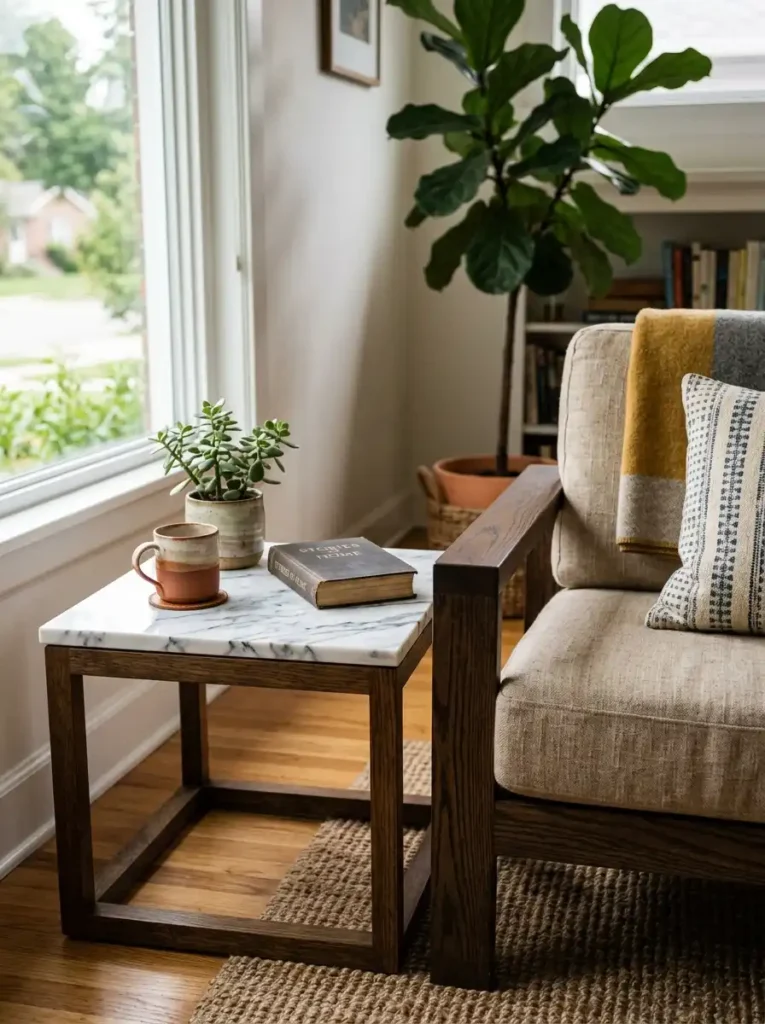
A marble side table or a natural stone coaster set introduces a cool, polished material into a room that’s often dominated by soft textiles and warm wood.
This contrast — hard against soft, cool against warm — is part of why the pairing shows up so often in well-designed rooms without needing extra styling around it.
Even a small stone object, like a set of bookends, can introduce the same effect on a smaller scale.
10. Bring In Warm Wood Tones

Mixing a couple of wood tones, rather than matching every piece exactly, makes a room feel collected instead of purchased as a set.
Pick one dominant tone for larger furniture — a coffee table or console — then let smaller accent pieces carry the second tone, keeping warm undertones consistent throughout.
This is one of the fastest ways to make newly bought furniture feel like it belongs with pieces you’ve had for years.
11. Add Rattan and Woven Textures

A rattan chair, a woven storage basket, or a jute-wrapped accent piece brings natural, woven texture into a room that might otherwise lean too smooth or too formal.
These pieces photograph especially well against a neutral backdrop, where their texture becomes the main visual interest rather than fighting for attention.
They also tend to hold up well in sunlight, which makes them a practical pick near a bright window.
12. Choose One Metal Finish — Brass or Matte Black

Picking a single metal finish and repeating it across lamp bases, picture frames, and hardware creates a subtle thread that ties a room together without anyone quite noticing why it feels cohesive.
Brass adds warmth; matte black adds contrast and a slightly more modern edge.
Mixing two finishes isn’t a hard rule either, as long as one clearly dominates and the second appears only once or twice.
13. Layer Ambient, Task, and Accent Lighting
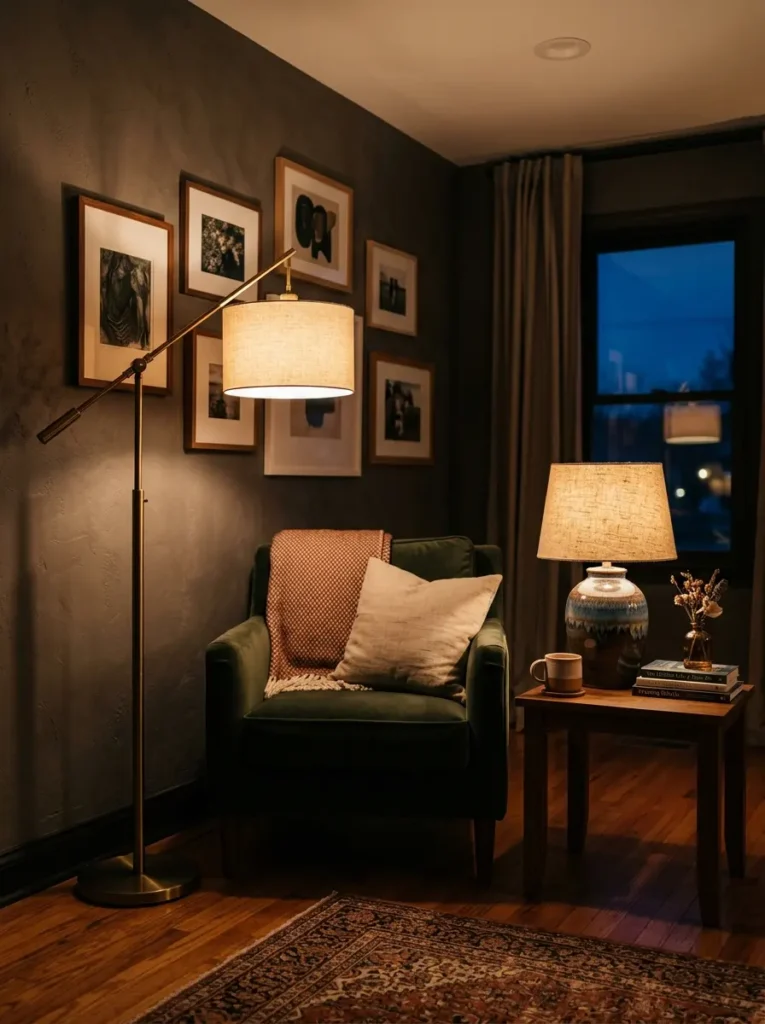
A single overhead fixture leaves a room flat and the corners dark.
Add a floor lamp near a reading chair, a table lamp on a console, and dimmable overhead lighting for evenings — this layered mix of ambient, task, and accent lighting gives you control over the room’s mood depending on the time of day.
Warm-toned bulbs, generally in the 2700K–3000K range, also make a noticeable difference compared to the cooler bulbs many fixtures ship with.
14. Add a Sculptural Coffee Table as a Quiet Statement
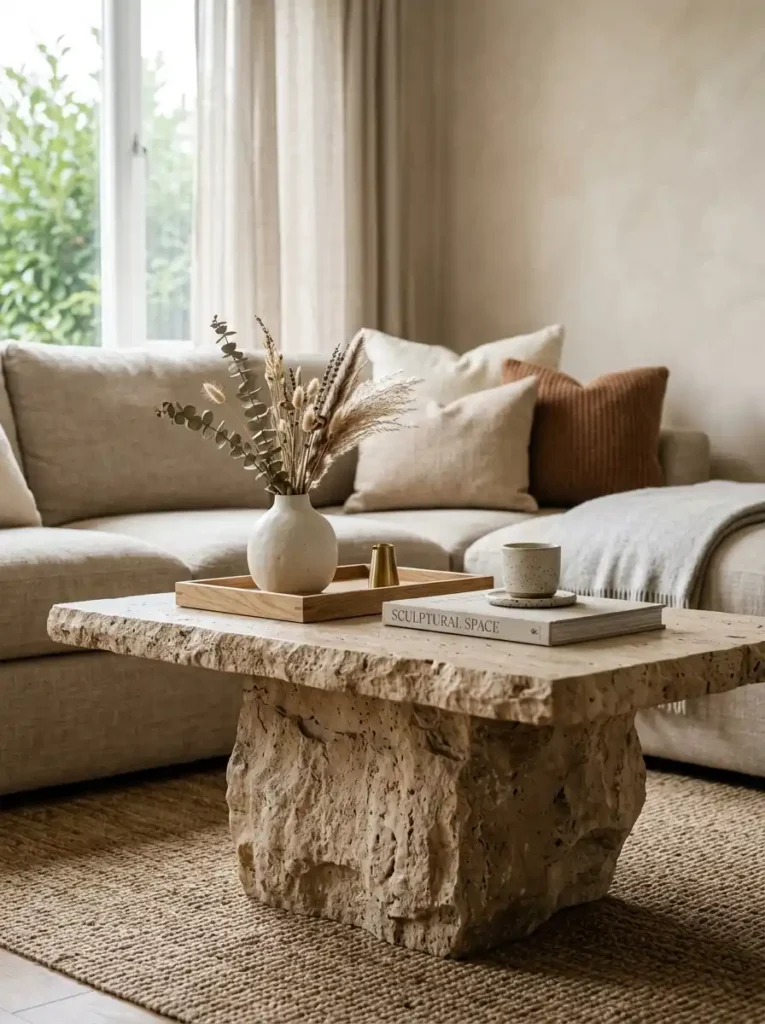
A coffee table with an interesting shape — curved edges, a stone base, or a mixed-material design — works as a quiet focal point without adding a single extra accessory.
Style the top simply: one tray, a small stack of books, and one object, so the table’s shape stays visible instead of getting buried.
In a smaller living room, a round or oval shape also leaves more room to walk around it comfortably.
15. Pick a Bouclé or Upholstered Accent Chair
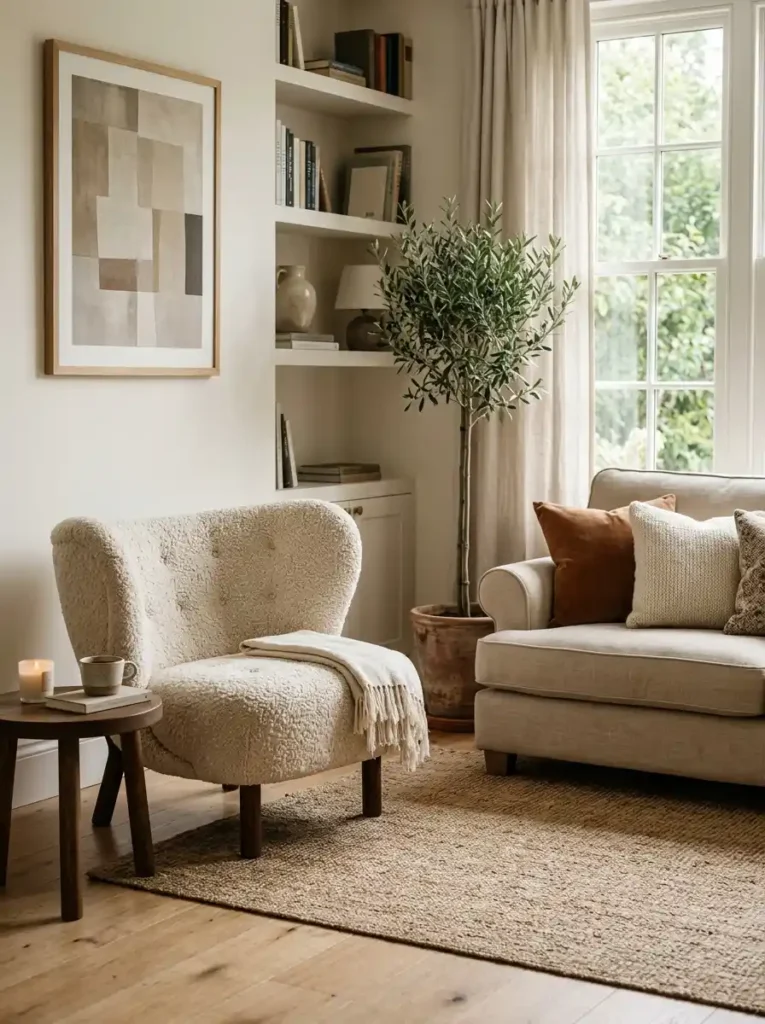
An accent chair in bouclé, velvet, or another textured upholstery gives the eye somewhere interesting to land and doesn’t need to match the sofa exactly — a slight contrast in fabric or color usually reads as more intentional than a perfectly matched set.
A curved or rounded frame also softens a room where most other furniture has straight, angular lines.
16. Group Ceramic Pottery and Vases on a Shelf
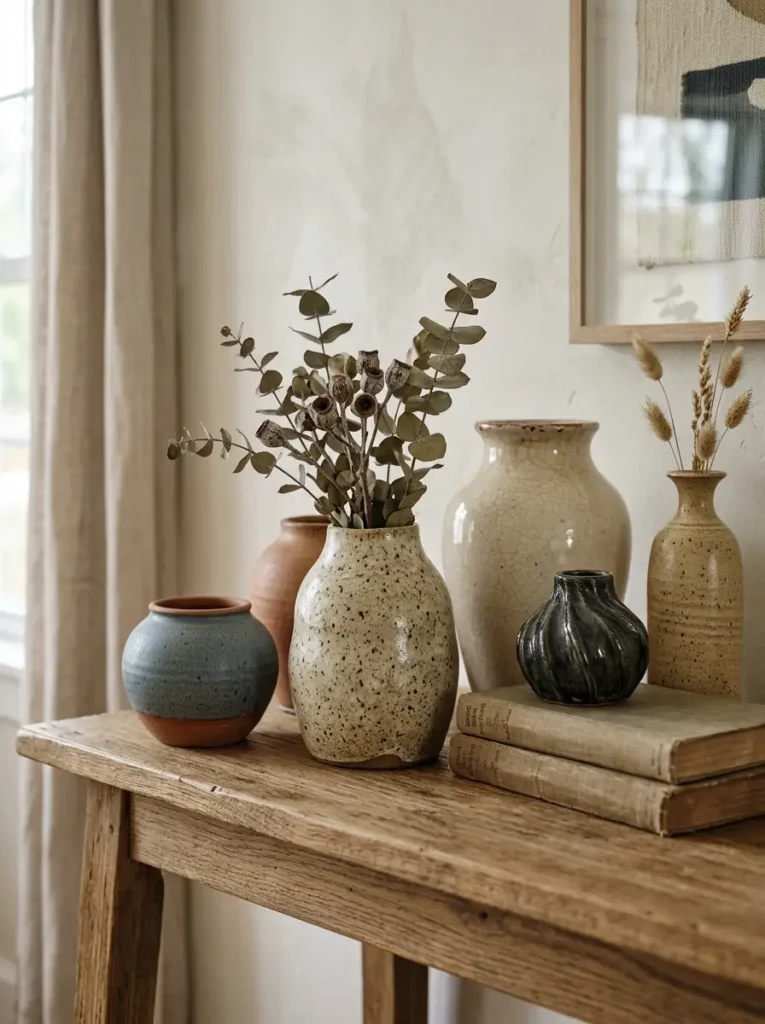
A small grouping of ceramic pottery and decorative vases at varying heights adds visual interest to a shelf or console without needing a single matched set.
Keep the color palette tight — two or three tones — so the grouping reads as curated rather than a collection of unrelated pieces.
Mixing a matte finish with a glossy one adds contrast even when the colors themselves stay close.
17. Stack Coffee Table Books With One Object
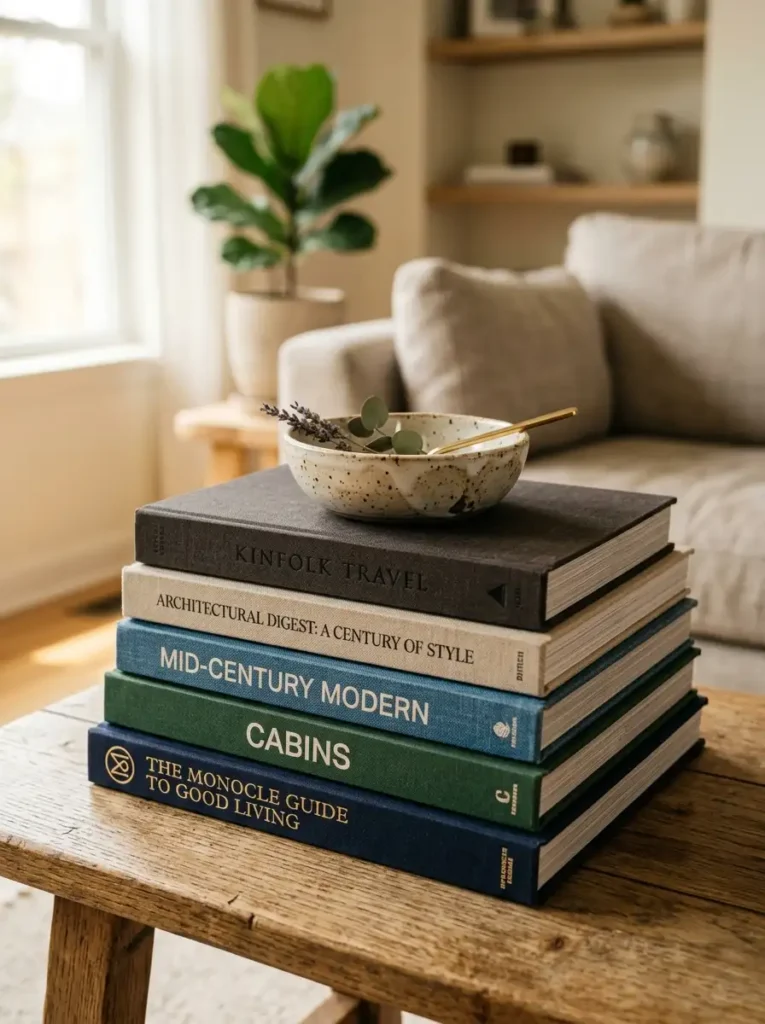
A small stack of coffee table books, topped with one object like a small ceramic dish or a candle, fills a coffee table without cluttering it.
Choose books you’d actually be glad to display — the cover colors do a surprising amount of the room’s styling work.
Stack two or three by size rather than one tall pile, which tends to look more precarious than intentional.
18. Bring Indoor Plants Into Every Corner
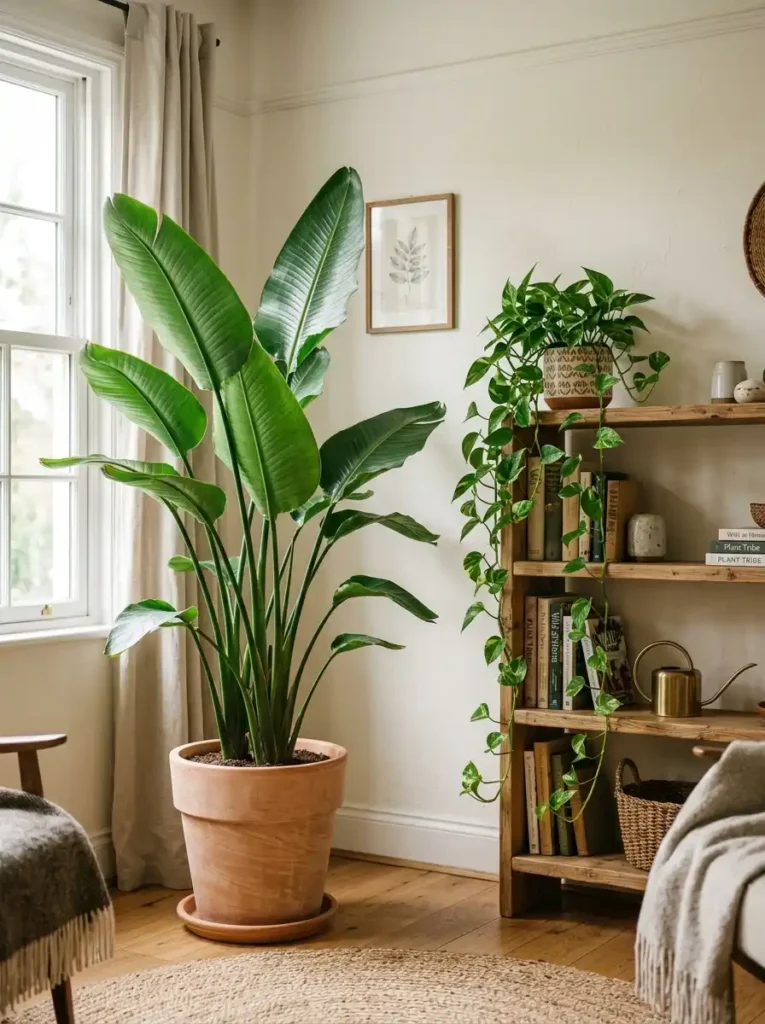
A tall plant in an empty corner, a mid-height plant on a side table, and something trailing from a bookshelf vary the room’s height and soften the hard edges of furniture and metal accents.
Low-maintenance options like a pothos or snake plant work well if you’re not confident keeping plants alive.
Grouping two or three pots of different heights together also reads as more intentional than scattering single plants around the room.
19. Build a Cohesive, Mostly Neutral Color Palette
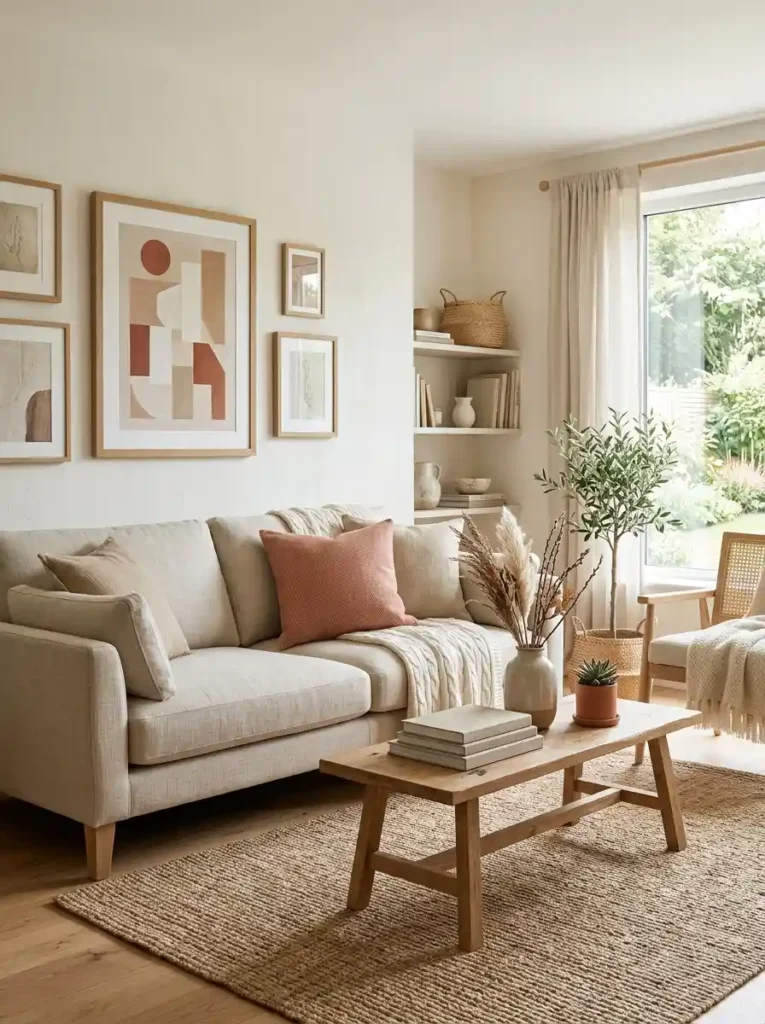
A neutral color palette built around two main tones and one accent color — repeated across the rug, a pillow, and a piece of art — is what makes a room feel designed instead of randomly assembled.
The accent doesn’t need to be bold; even a muted sage or terracotta works if it shows up more than once.
Repeating the accent at least three times across the room is usually what makes it register as a deliberate choice rather than a one-off.
20. Hang Wall Art With Visual Balance in Mind

Art hung above a sofa should span roughly two-thirds the width of the sofa to feel proportionate rather than floating or oversized.
If you’re using multiple smaller pieces instead of one large piece, group them with equal spacing to maintain the same sense of visual balance.
As a general rule, the center of the arrangement should land around 57 inches from the floor, which is standard eye level.
21. Style Open Shelves With Decorative Objects
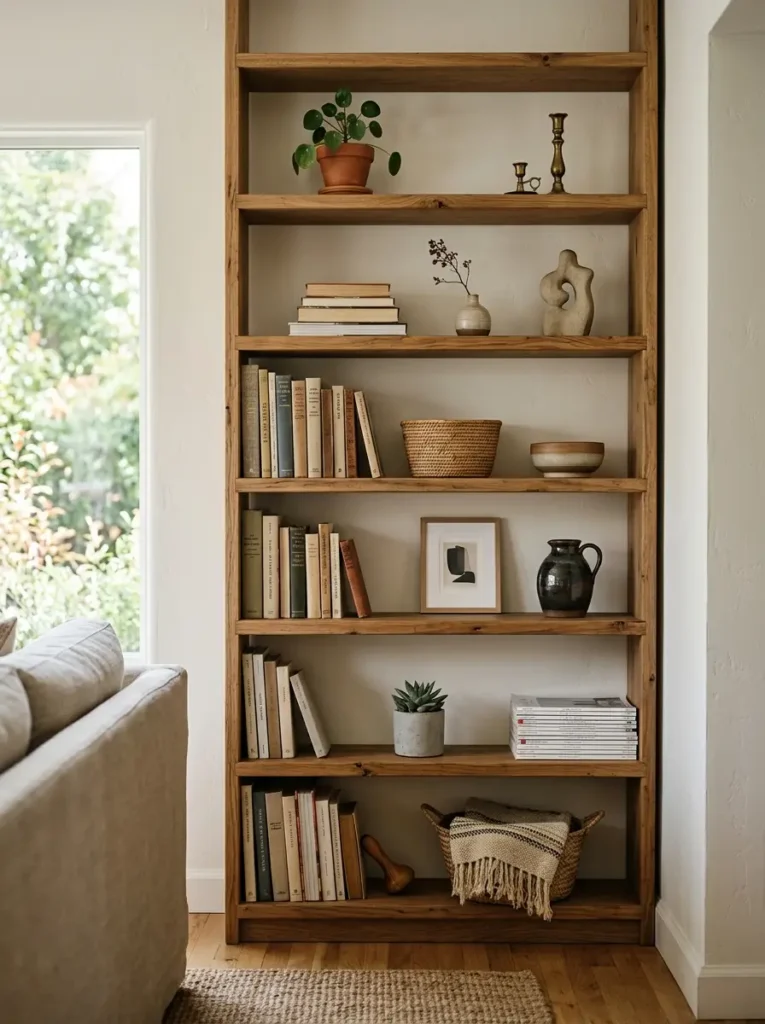
A bookshelf or open shelving unit styled the way you’d approach a gallery wall — mixing books, a few decorative objects, and visible negative space — reads as curated rather than a storage dump.
Avoid filling every inch; the empty space between groupings is doing real design work.
Turning a few book spines inward occasionally also creates quiet, neutral blocks of color between busier groupings.
22. Add One Sculptural Decor Piece as a Talking Point
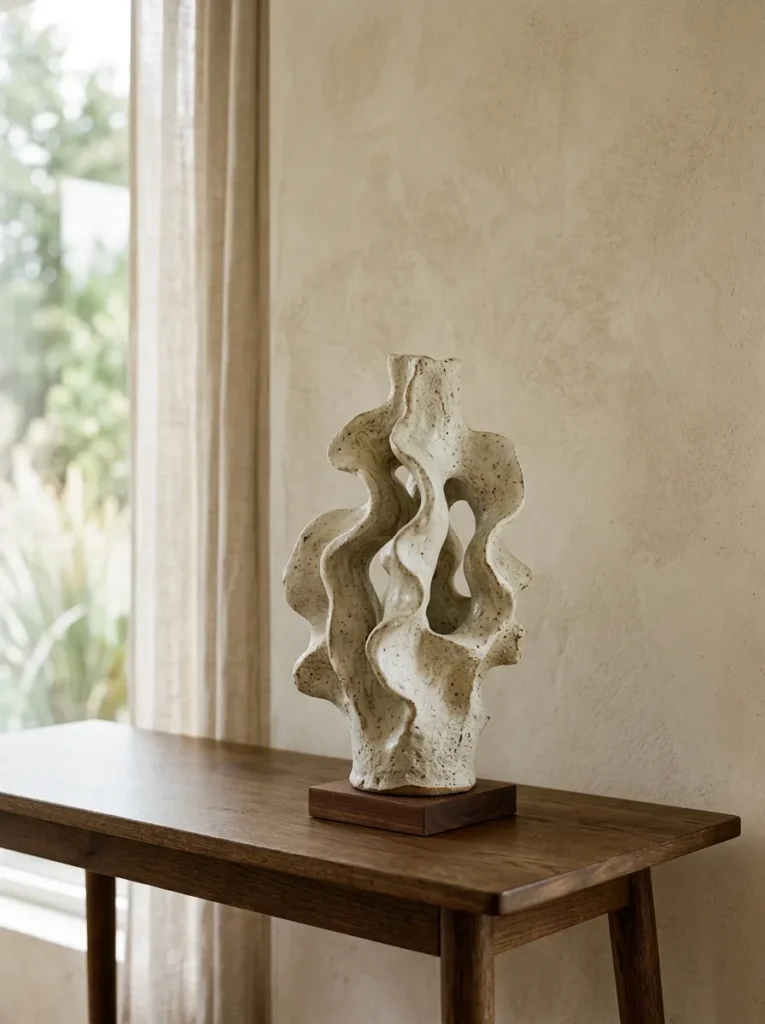
A single sculptural decor object — an abstract ceramic form, a carved wood sculpture, or an interesting found object — gives visitors something to actually ask about.
One piece is usually enough; place it somewhere with breathing room, like an empty console or a shelf with nothing crowding it, so it stands out rather than blending into a crowded grouping.
It’s often the last thing worth adding to a room, once everything else already feels settled.
Frequently Asked Questions
What are the easiest living room decor ideas to start with?
Throw pillows, a throw blanket, and a lamp swap are the lowest-cost, lowest-effort updates on this list. All three can be done in under an hour without rearranging furniture.
How do I make my living room look more expensive without a big budget?
Focus on layout and lighting first, since both are largely free, then add texture through pillows, a throw, and a quality rug before spending on new furniture.
What’s the difference between living room decorating and a full makeover?
Decorating usually means styling what you already have — pillows, art, small objects — while a makeover involves bigger changes like furniture, an accent wall, or new lighting fixtures.
How many pillows should be on a sofa?
For a standard three-seat sofa, three to five pillows in an odd number typically looks the most natural and least staged.
Should living room furniture match?
No. A room with slightly varied wood tones, metals, and furniture styles usually looks more curated and collected than a fully matched set.
Conclusion
You don’t need all 22 of these living room decor ideas at once, and most living rooms don’t need every single one.
Start with whatever’s bothering you most right now — flat lighting, a bare wall, a coffee table that never looks finished — and treat the rest as a running list for later.
A room that’s layered in gradually, one deliberate choice at a time, almost always feels more collected than one decorated in a single weekend.